For years, "voice commerce" meant asking Alexa to add paper towels to a shopping list and little else. That changed in May 2026, when Amazon folded its Rufus chatbot into a new "Alexa for Shopping" experience with a "Buy for Me" agent that completes checkout on third-party sites using stored payment details. Voice assistants stopped just answering questions and started closing sales. The question worth asking now isn't whether voice commerce exists — it's whether shoppers are actually ready to use it.
What Voice Commerce Actually Means (And What It Doesn't)
It's worth separating two things that get lumped together constantly: voice search and voice commerce.
Voice search is a shopper asking a voice assistant to find information — store hours, product availability, "what's the best lamp for a kid's room." It's a discovery and research behavior, and it's been mainstream for years.
Voice commerce is the narrower, harder behavior: a shopper actually completing a purchase, a reorder, or a checkout by talking to a device, rather than just researching through one. This is the category that's historically underdelivered relative to the hype — and the one that changed meaningfully in 2026.
The 2026 Shift: Voice Became a Transaction Layer
The defining change this year is that voice assistants stopped being intermediaries and started being closers. A few specific developments explain why:
Amazon's Alexa for Shopping (launched May 13, 2026) replaced the older Rufus chatbot with an agentic experience spanning the mobile app, desktop search, and Echo Show displays. Instead of just recommending a product, the "Buy for Me" agent can find it, compare options, and complete the purchase using stored payment information — voice now executes the transaction, not just the search that precedes it.
ChatGPT's voice mode crossed 100 million monthly users in early 2026, turning a conversational AI assistant into a genuine shopping-research and discovery surface, well beyond its original smart-speaker roots.
Google replaced Google Assistant with Gemini across Pixel and Nest devices, bringing LLM-level reasoning to what used to be a much more limited command-based assistant.
Amazon's Alexa+ subscription crossed 1 million paid subscribers within six months of launch, with Amazon reporting that Alexa+ users complete purchases on their devices roughly three times more often than non-subscribers (a vendor-reported figure worth treating as directional rather than independently verified).
Taken together, this is the first year voice assistants have been architecturally capable of handling complex, multi-step shopping requests — not just single commands like "reorder my usual coffee."
How Big Is Voice Commerce, Actually?
Numbers vary depending on the research firm and methodology, but the general shape is consistent across sources: the US voice commerce market is estimated in the range of $22 billion in 2026, with global estimates running considerably higher depending on how "voice commerce" is defined and measured. Roughly half of US consumers report having made at least one purchase through a voice assistant at some point.
On the platform side, Google Assistant (soon fully replaced by Gemini) leads in US user count, followed closely by Siri, with Alexa trailing slightly in raw user numbers but dominating the smart-speaker category specifically, where actual voice purchasing is concentrated.
Generationally, adoption skews younger — close to a third of Gen Z shoppers report using voice assistants for shopping on a weekly basis, a meaningfully higher rate than older demographics.
Why Shoppers Are (and Aren't) Ready to Buy By Voice
This is where the "will shoppers actually do this" question gets genuinely interesting, because the data points in two different directions depending on what kind of purchase you're talking about.
The trust gap is real. Despite roughly half of consumers having tried voice purchasing, survey data suggests a large share — close to half — still don't fully trust a voice assistant with a purchase decision. That's a meaningful ceiling on how far voice-first shopping can grow without a shift in consumer confidence.
But loyalty and reorders are a different story. A large majority of voice shoppers say they reorder the same brand, and a clear majority say they'd specifically prefer voice for repeat purchases — items they've already bought before, already trust, and don't need to re-research. This is the pattern that explains where voice commerce is actually succeeding: known items, not new discovery.
Impulse buying shows up too. A meaningful share of voice shoppers admit to making impulsive purchases specifically because voice removes the friction of typing, scrolling, and comparing — for low-consideration items, that friction reduction genuinely changes behavior.
The honest read: shoppers aren't uniformly "ready" for voice commerce — they're ready for it in specific, low-risk, already-trusted purchase scenarios, and considerably more hesitant for anything higher-stakes or unfamiliar.
Where Voice Commerce Is Actually Working in 2026
A few categories show genuinely strong, sustained voice purchasing behavior:
- Grocery and food reorders — the single strongest category, driven by habitual, low-consideration purchasing
- Subscription and replenishment items — voice-initiated subscription management has grown significantly year over year, since there's nothing to decide, just a reorder to confirm
- In-car purchases — a small but rapidly growing share of voice purchases now originate from vehicles, more than doubling in a few years as automotive voice assistants become standard equipment
- Order tracking and simple account tasks — a meaningful share of voice assistant use isn't purchasing at all, but managing an order that's already been placed
Where It's Still Struggling
Voice commerce continues to underperform for anything that benefits from visual comparison or genuine research — fashion, higher-cost electronics, and any purchase where a shopper wants to see multiple options side by side before deciding. It's also weaker for brand discovery: voice is a poor medium for a shopper encountering a new brand for the first time and needing to build trust before buying, which is exactly the scenario the trust-gap data above reflects.
What This Means for Your Store's Catalog
Here's the part that matters most for merchants, regardless of whether shoppers are buying through Alexa, ChatGPT, or a conversational AI agent on your own site: voice and agentic shopping tools can only recommend and purchase products they can actually understand.
This is turning into a real bottleneck. A significant share of ecommerce catalogs — by some estimates, well over half — have missing product identifiers (GTINs) or inconsistent product attributes, against a working benchmark of near-complete GTIN coverage that AI shopping agents increasingly expect. Products that fail this minimum bar get quietly excluded from AI recommendation and voice-purchasing pools entirely, regardless of how good the product actually is.
Feed freshness matters just as much. AI shopping agents are increasingly expecting inventory and pricing data to update within a roughly 15-minute window, not a nightly batch sync — a real-time expectation that a lot of legacy catalog setups aren't built for yet.
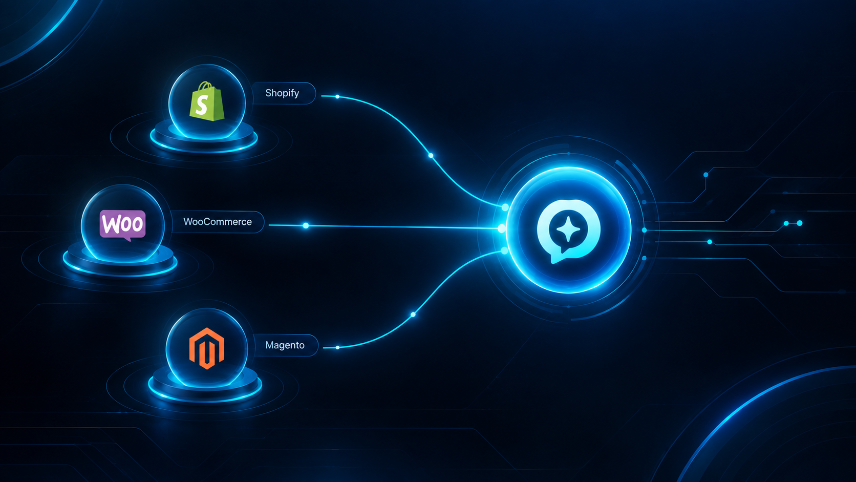
This is the same underlying theme covered in our piece on why Shopify, WooCommerce, and Magento stores all share the same product discovery problem — catalog data quality is the foundation every AI-driven shopping experience depends on, whether it's a voice assistant, a chat widget, or a product recommendation engine .
What Merchants Should Actually Do to Prepare
Fix your product data before optimizing anything else. Complete GTINs, consistent attributes, and specific, descriptive titles aren't a "nice to have" for voice and AI shopping agents — they're the minimum bar for a product to be considered at all.
Treat inventory and pricing sync as real-time, not batch. If your stock levels or prices lag by hours, an AI shopping agent making a purchase decision on outdated information is a direct path to a canceled order and a frustrated customer.
Write product content the way a shopper would actually ask about it. Voice queries are conversational and question-based — content structured around real questions ("does this ship internationally," "is this machine washable") performs better in both voice search and conversational AI shopping than a dense spec sheet.
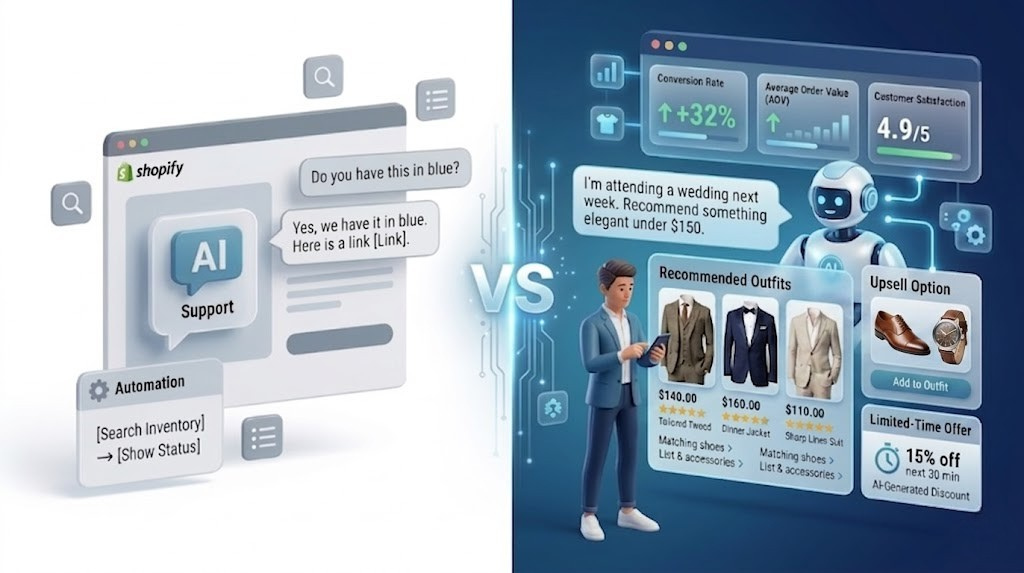
Don't treat voice as separate from your broader conversational commerce strategy. The same underlying principles that make a conversational AI sales agent effective on your own website — understanding intent, carrying context, recommending accurately — are exactly what determines whether your products surface well in voice and agentic shopping experiences elsewhere too.
So — Will 2026 Be the Tipping Point?
Partially, and unevenly. For reorders, subscriptions, groceries, and anything a shopper has already bought and trusted before, 2026 genuinely is the year voice shifted from novelty to a real transaction channel — the launch of agentic "buy for me" experiences from major platforms is a structural change, not a marketing claim. For new brand discovery, considered purchases, and anything visual or comparison-heavy, voice commerce remains a secondary channel at best, held back by a real and measurable trust gap that isn't closing overnight.
The more useful question for most merchants isn't "should I build a voice strategy" — it's "is my catalog and conversational shopping experience good enough that an AI agent, voice-based or otherwise, can actually recommend and sell my products accurately." That's a problem worth solving regardless of which specific voice assistant ends up winning.
Frequently Asked Questions
The Bottom Line
Voice commerce didn't fully arrive in 2026 the way early hype cycles predicted years ago — but it did cross a real structural threshold, moving from answering questions to actually completing purchases for the first time at scale. Whether your own shoppers start buying by voice specifically may matter less than whether your store is ready for the broader shift this represents: AI agents, voice or otherwise, deciding what gets recommended and purchased based on how well your catalog and conversational experience actually work.
If you want to see how a conversational AI sales agent can prepare your store's product discovery and recommendations for this shift — on your own site, independent of any single voice platform — you can book a 30-minute walkthrough using the link below, or start a conversation on WhatsApp.
Keywords