For about six months, OpenAI ran one of the boldest experiments in the history of ecommerce: letting people buy things without ever leaving a chat window. In September 2025, ChatGPT's Instant Checkout let US users purchase directly from Etsy sellers inside the chat, with Shopify merchants like Glossier, SKIMS, Spanx, and Vuori lined up to follow. The pitch was simple and, on paper, thrilling — over 700 million people were already asking ChatGPT for help every week, and a large share of those questions touched shopping in some way. Why not let the AI close the loop?
Then, in March 2026, OpenAI quietly walked it back.
In a blog post, the company admitted that the initial version of Instant Checkout didn't offer the flexibility merchants needed. Instead of owning the full purchase journey, ChatGPT would now focus on product discovery — search, comparison, visual browsing — and hand shoppers off to retailers to actually complete the sale. Walmart's own AI leadership described Instant Checkout bluntly as "a very temporary moment in time."
If you sell online, this isn't just AI industry gossip. It's a preview of a shift that's going to reshape how every ecommerce store thinks about traffic, conversion, and where the "real" storefront actually lives. This piece breaks down exactly what happened, why it happened, and — more importantly — what you should actually do about it if you run a Shopify or WooCommerce store.
In this article:
- What Instant Checkout actually was, and what replaced it
- The three real reasons it stalled
- Why "discovery" and "conversion" are becoming two separate businesses
- A practical action list for merchants
- Where this is realistically headed by 2030
A Quick Recap: What Was Instant Checkout, Exactly?
Before we get into why it failed, it's worth being precise about what Instant Checkout actually promised, because the ambition was genuinely bigger than most "AI shopping" features that came before it.
Most AI shopping tools up to that point did one thing: recommend. You'd ask a chatbot "what's a good gift for my dad who likes hiking," it would suggest three products, and then you'd click through to a website and do everything else yourself — add to cart, enter your address, enter your card, confirm the order.
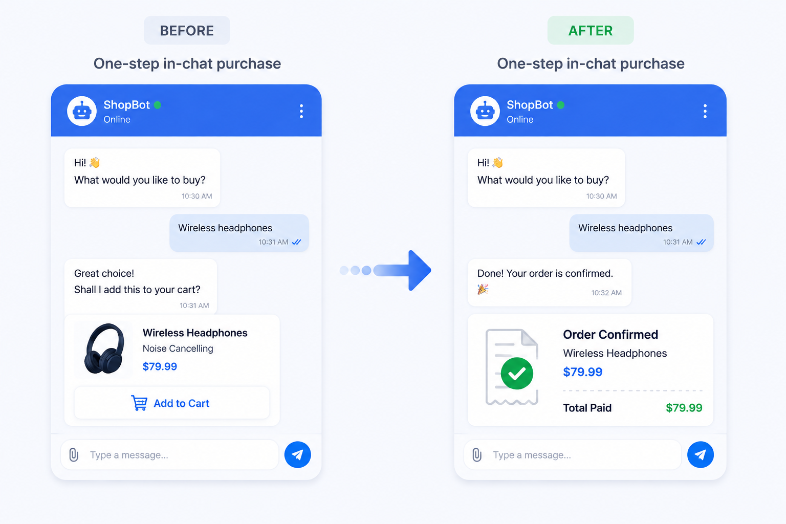
Instant Checkout tried to remove that entire second half of the journey. The pitch was:
- No leaving the chat window
- No re-entering shipping or payment details
- No separate login on a merchant's site
- Purchase happens the moment you decide you want something
On paper, this collapses two steps — "I want this" and "I bought this" — into a single moment. That's an enormous deal for impulse purchases, low-consideration items, and anything where friction is the main thing standing between a browser and a buyer. It's also, as it turned out, a much harder problem to solve at scale than it looked from the outside.
What Actually Changed
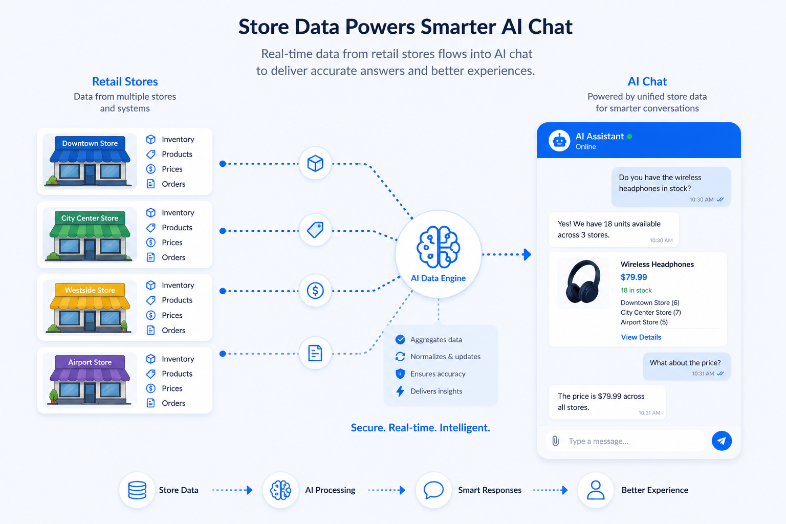
The surface-level story is simple: ChatGPT can no longer process a purchase from start to finish inside the chat window. But the more interesting story is why, and what replaced it.
OpenAI expanded something called the Agentic Commerce Protocol (ACP) — an open standard it built with Stripe — so that retailers' live catalog data flows directly into ChatGPT. Here's what that actually enables for a shopper today:
- Upload a photo of something they like and ask ChatGPT to find similar products
- Describe what they want in plain, natural language instead of using search filters
- Set a budget and get options that respect it
- Get a visual, side-by-side comparison of real products from real stores, with live pricing and availability
Seven major retailers are already live on ACP, including:
- Target
- Sephora
- Best Buy
- Nordstrom
- Lowe's
- The Home Depot
- Wayfair
Notice what's missing from that list: the "buy" button. When a shopper finds something they like, ChatGPT sends them to the retailer's own site or app to finish the transaction. The AI's job stops at "here's exactly what you want and where to get it" — it no longer touches the money.
How different brands are adapting to this split
Two examples show two very different strategies for the same underlying shift:
Walmart went deep rather than wide. It built a dedicated in-ChatGPT app so its own Sparky assistant, account linking, loyalty program, and saved payment methods all travel with the shopper inside the chat experience — but the actual checkout still happens on Walmart's own systems, under Walmart's own rules. Essentially: let the AI live inside our world, not the other way around.
Shopify went wide rather than deep. It launched its own Agentic Plan, letting merchants — even ones without a full Shopify storefront — surface their products inside ChatGPT, Gemini, and other AI platforms through Shopify's own catalog tools, instead of depending on OpenAI's checkout flow at all. This means a Shopify merchant's exposure to AI shoppers isn't tied to any single AI company's roadmap or policy changes.
Both approaches point at the same conclusion: nobody wants to hand over the final step of the sale to a platform they don't control.
Why It Actually Failed
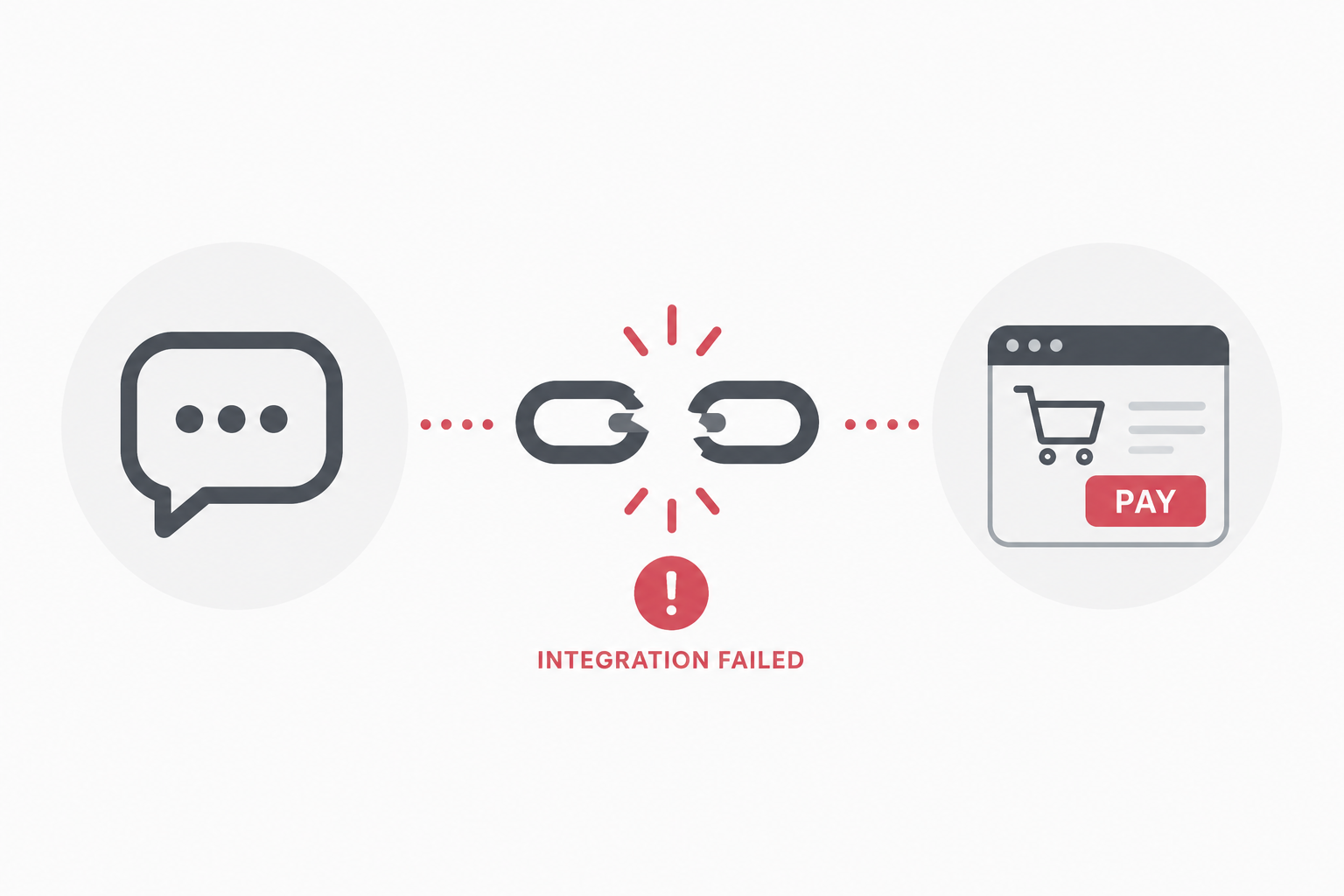
Analysts who track this space point to three practical reasons Instant Checkout stalled instead of scaling. It's worth understanding each one in some depth, because each one maps directly to a decision you'll eventually have to make about your own store.
1. Merchants couldn't control the experience
A checkout flow is never "just" a checkout flow. Underneath it sits a huge amount of business logic that most shoppers never consciously notice, but every merchant has spent years tuning:
- Discount codes and promo stacking rules
- Loyalty points and rewards redemption
- Fraud and chargeback checks specific to that store's risk profile
- Upsells and cross-sells at the cart stage
- Shipping options, delivery windows, and carrier choices
- Brand-specific return and exchange policies baked into the checkout copy
Handing checkout off to a third party's generic flow meant losing control over most of this. A shopper buying through Instant Checkout wasn't seeing the merchant's actual optimized checkout — they were seeing OpenAI's version of one, and merchants had very little ability to shape that experience to fit their brand or their margins.
2. Onboarding was harder than it looked
Getting accurate, real-time product data, pricing, and inventory into someone else's platform reliably is a genuinely hard integration problem — especially at the scale ChatGPT operates at, with hundreds of millions of weekly users. Catalogs change constantly: prices shift, items go out of stock, new variants get added. Any lag or mismatch between what ChatGPT shows and what's actually available creates a broken promise at the exact moment a customer is ready to buy — which is about the worst possible place in the funnel for that kind of error to happen.
3. Purchase volume stayed low even where it worked
Etsy, one of the earliest and most cooperative partners, said publicly that ChatGPT had become a valuable discovery channel — but actual purchase volume through Instant Checkout stayed low, because the technology was still nascent. People were happy to ask ChatGPT for ideas. They weren't yet ready to trust it with the actual purchase.
Shopify's own numbers make the point sharper. Company president Harley Finkelstein noted that only about a dozen Shopify merchants were actively using AI shopping tools in any meaningful way — a tiny fraction of Shopify's total merchant base, despite the company supporting integrations with ChatGPT, Gemini, and Copilot for a while now.
Put simply: AI got good at helping people decide what to buy, long before it got good at handling the messy, brand-specific reality of actually selling it to them. Decision-making is a language problem. Selling is an operations problem. Those are very different muscles.
The Real Lesson: Discovery and Conversion Are Splitting Apart
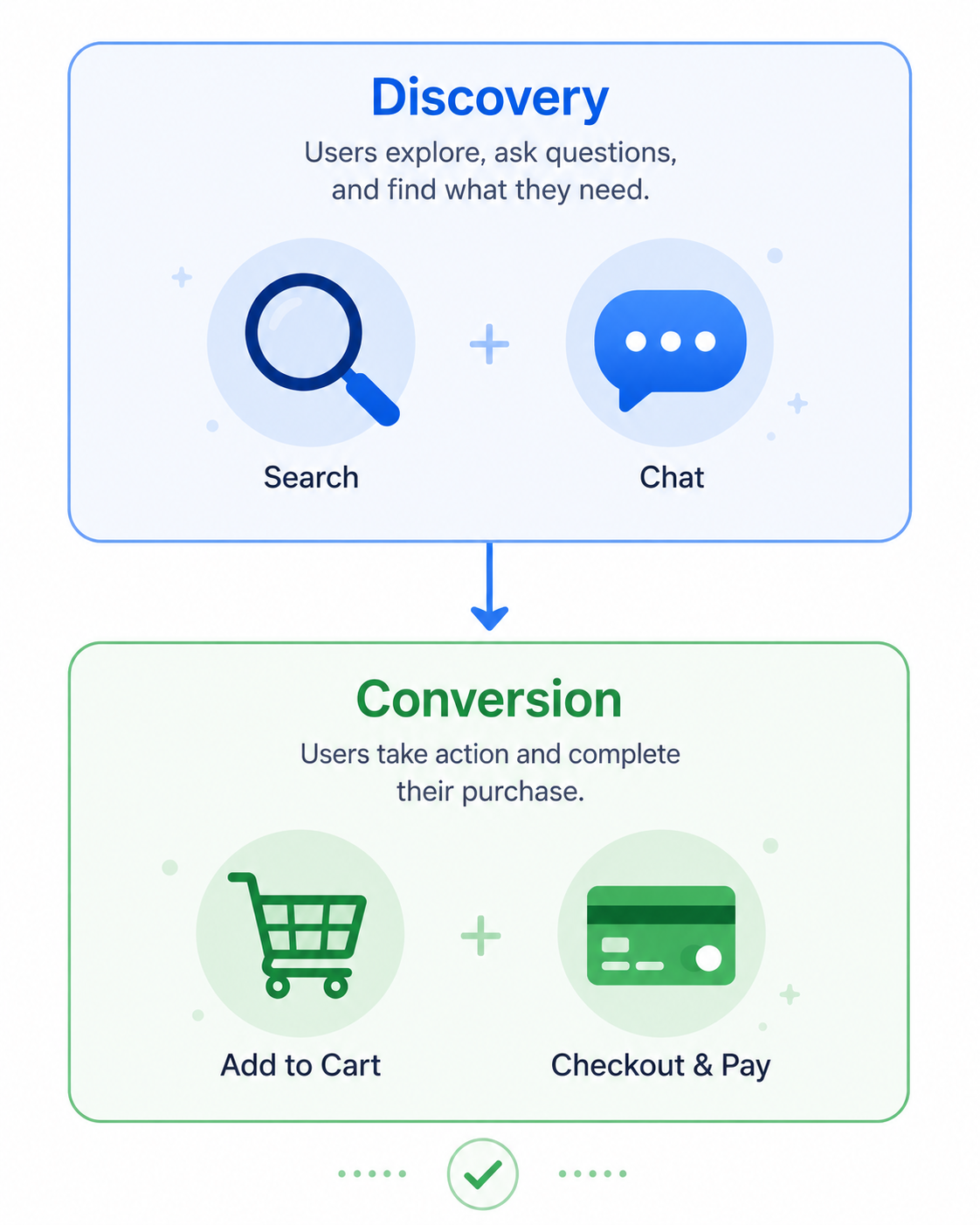
This is the part worth sitting with, because it's easy to read this whole story as "AI shopping didn't work" — and that would be the wrong takeaway.
What actually happened is that the shopping journey is splitting into two distinct layers, and different players are going to own each one:
The Discovery Layer
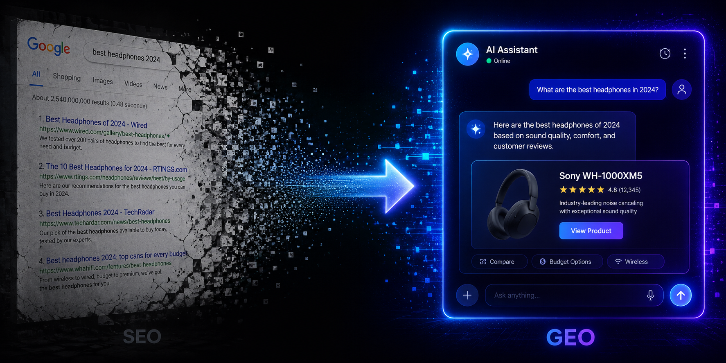
This is where a shopper figures out what they want. It's moving toward AI platforms like ChatGPT, Gemini, and Perplexity — the same way search moved to Google two decades ago. This is where AEO and GEO (Answer Engine Optimization / Generative Engine Optimization) start to matter as much as traditional SEO once did: whether your products, reviews, and content actually get surfaced when someone asks an AI assistant a shopping question is becoming its own discipline.
The Conversion Layer
This is where a shopper actually decides to buy — applies a code, chooses a shipping option, confirms payment, and completes the transaction. This layer is staying with the merchant, on the merchant's own site, in the merchant's own systems. Nobody who has spent years optimizing their checkout wants to give that up to a third party's generic flow.
For a while, it genuinely looked like OpenAI wanted to own both layers at once. That's no longer the plan, at least not for now. Bank of America analysts noted that OpenAI's shift to an app-based model could actually open the door to even bigger partners, like Amazon, precisely because it lets retailers keep control of the experience and the payment. In other words, stepping back from owning checkout might make ChatGPT more attractive to big retailers, not less.
This split isn't a failure state — it's closer to how most mature technology ecosystems settle. Search engines discover, but they don't fulfill orders. Review sites influence decisions, but they don't process payments. AI chat is settling into the same role: an extremely powerful front door that still points toward someone else's store.
What This Means If You Run a Shopify or WooCommerce Store
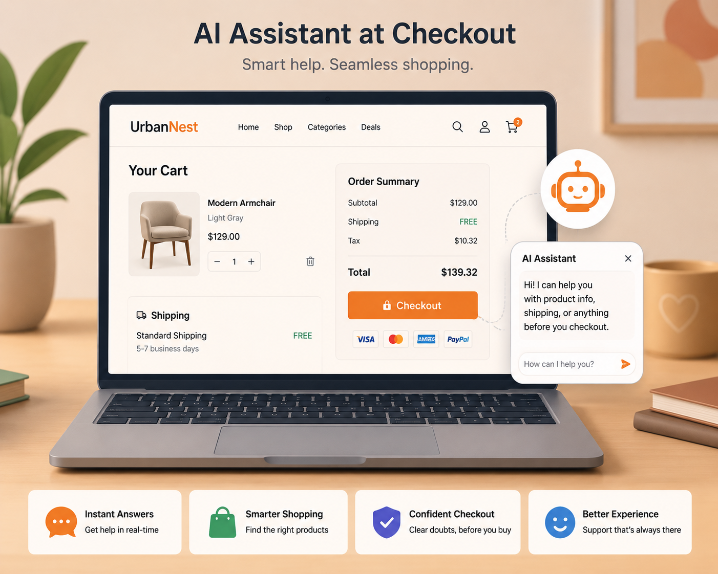
None of this reduces the importance of AI in your sales funnel — if anything, it sharpens exactly where you need to invest, because the two halves of the funnel now clearly belong to two different owners.
1. You still need to be discoverable by AI
Shoppers are already asking ChatGPT, Gemini, and Perplexity for product recommendations, comparisons, and reviews before they ever land on a website. If your product pages, structured data, and content aren't set up in a way AI systems can read and trust, you're invisible at the exact moment someone is deciding what to buy — regardless of whether checkout ever happens inside the chat. This means clean product feeds, accurate structured data, and content that actually answers the questions a shopper (or an AI on their behalf) would ask.
2. The pressure is now entirely on your own site to convert
Since AI platforms have stepped back from owning checkout, the full burden of turning a curious visitor into a paying customer falls back on your store. That means the conversation someone was having with ChatGPT about "which serum is right for oily skin" needs to continue seamlessly the moment they land on your site — not restart from zero with a generic search bar and a wall of unrelated products.
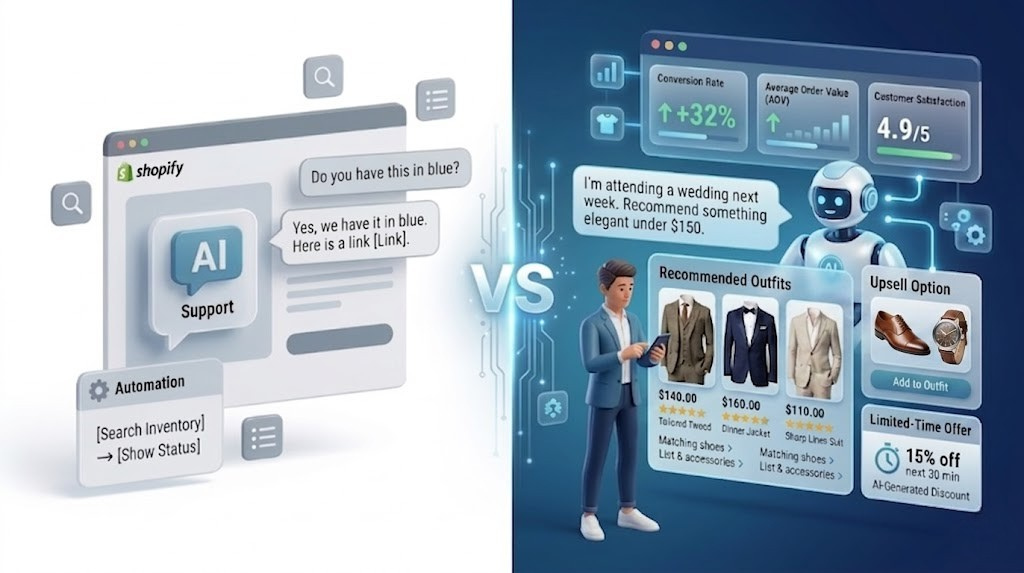
3. An AI sales agent on your own store is no longer optional — it's the missing half of the equation
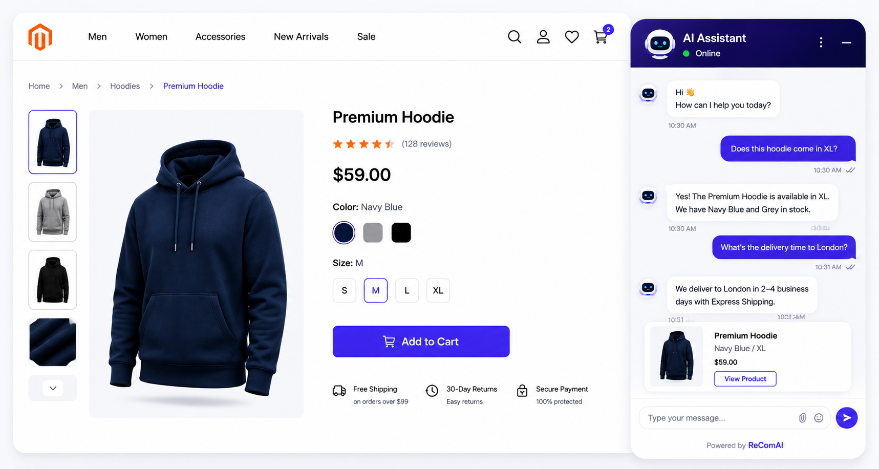
This is precisely the gap tools like ReComAI are built to close. If AI is going to bring a shopper to your door already having asked half their questions somewhere else, your store needs its own AI that can pick up exactly where that conversation left off — recommending the right product, answering follow-up questions instantly, and guiding them to checkout without friction. Discovery may happen off-site now. Conversion has to happen brilliantly on-site, or all that AI-driven traffic just bounces.
4. Don't build your strategy around any one AI platform's checkout feature
Instant Checkout looked, for a moment, like infrastructure worth building a business around. Six months later, it's gone. The lesson isn't "avoid AI commerce" — it's "own the parts of the experience that matter most, on infrastructure you control," and treat every AI platform as a discovery channel rather than a dependency. Platforms change their strategy; your own store is the one asset that doesn't get deprecated by someone else's roadmap decision.
A practical checklist to act on this today
- Audit whether your product feed and structured data are clean enough for AI platforms to read accurately
- Make sure your return policy, shipping info, and FAQs are written in plain language AI can summarize correctly
- Add on-site AI assistance that can answer product questions instantly, instead of routing everyone to a generic search bar
- Track how much traffic is arriving from AI referral sources, and treat it as its own channel worth optimizing for
- Avoid deep, exclusive integrations with any single AI platform's proprietary checkout flow
Where This Goes Next
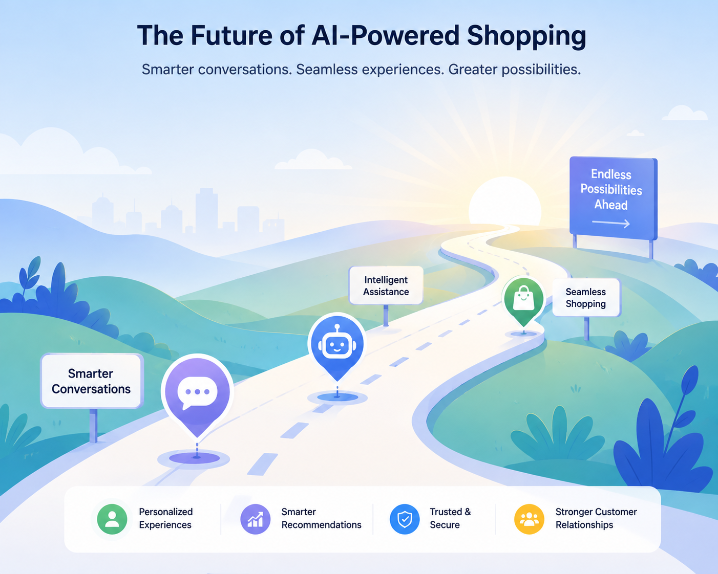
OpenAI hasn't abandoned commerce — it's recalibrating. The Agentic Commerce Protocol is still expanding, Walmart's Sparky is moving deeper into ChatGPT, and analysts expect more retailers, possibly even Amazon, to plug in over the coming months. Morgan Stanley still projects that by 2030, nearly half of online shoppers will use AI agents in some part of their shopping journey, representing roughly a quarter of their total spending.
The direction of travel hasn't changed. What changed is who holds the final step of the sale — and for now, at least, that answer is: you do.
That's exactly why the store you actually convert on deserves the same AI-native experience shoppers are already getting used to everywhere else. The merchants who win the next few years won't be the ones who bet everything on one AI platform's checkout button — they'll be the ones who made sure their own store was ready the moment AI-driven traffic showed up at the door.
Want to see what an AI sales agent looks like on your own Shopify or WooCommerce store — one that picks up the conversation and closes the sale? Book a free demo with ReComAI or start your 14-day free trial today.
Keywords