
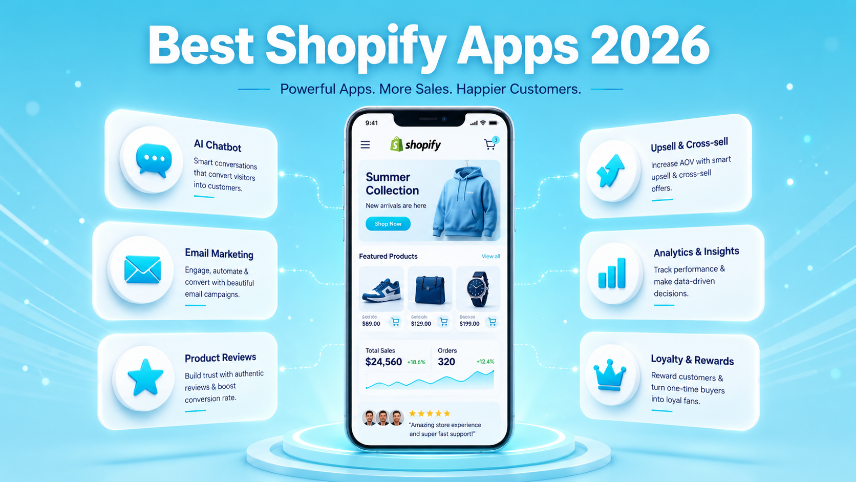
Introduction
Running a Shopify store in 2026 is more competitive than ever. Customer expectations have skyrocketed, advertising costs continue to rise, and store owners face the constant challenge of scaling revenue without unsustainably increasing their marketing spend.
The good news? The Shopify ecosystem has evolved rapidly, offering advanced tools designed to automate complex workflows, hyper-personalize customer engagement, and natively boost conversions.
However, with thousands of tools available, choosing the right tech stack can be overwhelming. In this ultimate guide, we break down the absolute best Shopify apps in 2026 across critical growth categories to help you build a high-converting, automated storefront.
Why Shopify Apps Matter in 2026
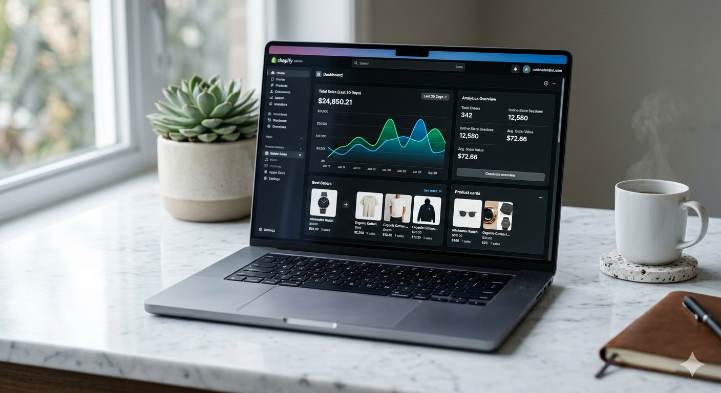
A Shopify store without the right apps is like a smartphone without applications. In 2026, apps do more than just add simple features - they leverage predictive AI and deep automation to:
- Maximize Conversion Rates:Remove friction throughout the buying journey.
- Skyrocket Average Order Value (AOV):Implement smart upselling and cross-selling.
- Reduce Cart Abandonment:Capture lost revenue via multi-channel automation.
- Scale Retention:Turn one-time buyers into lifetime brand advocates.
The 2026 Reality: As agentic AI becomes deeply embedded into ecommerce, utilizing advanced Shopify apps is no longer a luxury for top-tier brands - it is a baseline requirement to stay competitive.
What Makes a Great Shopify App?
Before installing any application, top-performing merchants evaluate software using five strict pillars:
| Pillar | Strategic Importance |
|---|---|
| Performance Impact | Clean code structure that won't compromise your theme's page-load speed. |
| ROI Potential | Direct alignment with increasing revenue, saving internal time, or cutting operational costs. |
| Ease of Use | Plug-and-play interfaces that require zero technical expertise or developer resources. |
| Customer Support | 24/7 technical support to protect your checkout pipeline during high-traffic sales events. |
| Scalability | Software that grows seamlessly alongside your enterprise scaling milestones. |
The Best Categories & Shopify Apps for 2026
1. AI Shopping Assistants & Conversational Commerce
Generic, static shopping experiences are officially dead. In 2026, modern consumers prefer interacting with a dynamic assistant over clicking through complex navigation menus. AI Shopping Assistants guide buyers in real-time, matching intent with the perfect product catalog match.
Featured App: ReComAI
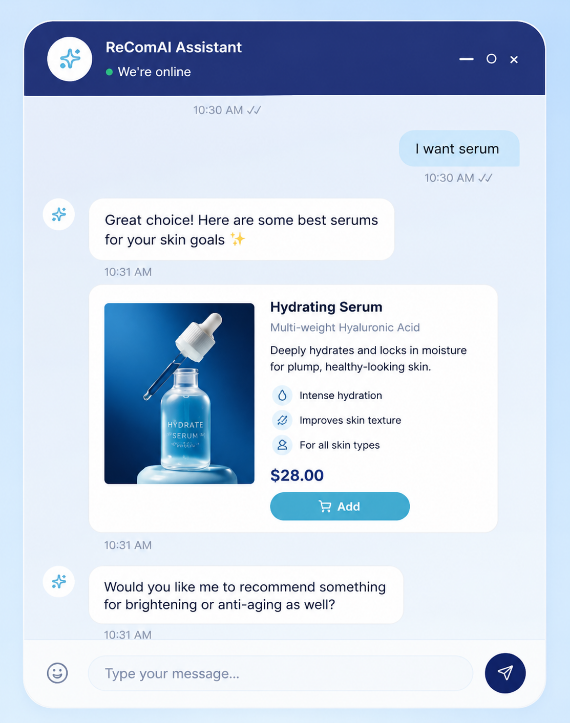
ReComAI serves as a premier AI Shopping Assistant that bridges the gap between customer curiosity and conversion.
- Key Capabilities:24/7 autonomous customer assistance, real-time smart product recommendations, dynamic upselling, and instant answers to complex product inquiries.
- The Growth Impact:By acting as a virtual retail associate, it eliminates navigation friction, reduces bounce rates, and ensures shoppers find exactly what they need within seconds.
Top App Alternatives in This Space:
- Gorgias:For unified, AI-driven helpdesk support across email, chat, and social media.
- Shopify Inbox:A native, budget-friendly conversational starting point for early-stage stores.
2. Email & SMS Marketing Automation
Owned marketing channels remain the highest-ROI drivers in ecommerce. Advanced retention apps allow you to move away from generic blast emails and embrace hyper-segmented, behavior-triggered workflows.
Best Shopify Email & SMS Marketing Apps for 2026. Image Credit: [Shopify Ecosystem] Top Apps to Consider:
- Klaviyo:The undisputed industry gold standard for predictive data, advanced segmentation, and automated flow flows (Welcome, Cart Abandonment, Win-back).
- Attentive:Exceptional for brands prioritizing high-deliverability SMS marketing and dynamic, text-driven conversational checkouts.
- Omnisend:A robust, omni-channel marketing solution perfectly optimized for agile, scaling businesses.
3. Reviews & Social Proof Platforms
Modern consumers trust community validation far more than brand advertising. High-fidelity review apps build instant credibility by beautifully showcasing user-generated content (UGC) directly on product pages.
Top Apps to Consider:
- Yotpo:An enterprise-level platform combining photo/video reviews, visual marketing displays, and syndication features.
- Judge.me:A remarkably fast, lightweight, and cost-effective review app that offers rich features without dragging down site performance.
- Loox:Perfectly tailored for visual brands, generating beautiful photo reviews and video social proof widgets that match clean modern designs.
4. Upsell, Cross-Sell & Bundle Solutions
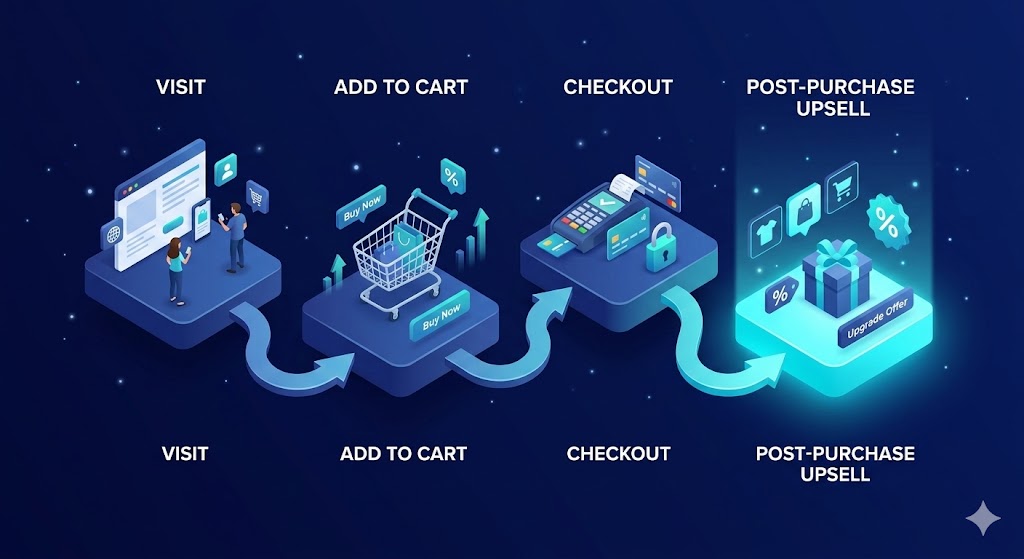
Acquiring new site traffic is incredibly expensive. Maximizing the financial yield of the traffic you already have is the most effective shortcut to scaling profitability.
Advanced Upsell and Cross-sell widgets operating on a modern Shopify product page.
Top Apps to Consider:
- ReCart / Reconvert:Incredible post-purchase upselling tools that present highly relevant offers immediately after a customer completes checkout.
- Frequently Bought Together:Emulates Amazon's powerful recommendation engine, letting users add entire complementary product bundles to their cart with a single click.
- Bold Bundles:Excellent for creating complex tiered pricing matrices, mix-and-match kits, and promotional buy-one-get-one deals.
5. Loyalty, Referral & Retention Platforms
With customer acquisition costs (CAC) continuing to rise across ad networks, prioritizing customer lifetime value (LTV) is critical. Loyalty platforms turn casual buyers into passionate community ambassadors.
Top Apps to Consider:
- Smile.io:A beautifully intuitive app to launch points-based loyalty programs, VIP tiers, and viral referral rewards quickly.
- LoyaltyLion:An advanced data-driven retention platform ideal for rewarding specific on-site actions and building custom, branded loyalty hubs.
6. Advanced Analytics & Reporting Tools
Making business decisions based on guesswork is an easy way to lose market share. Advanced analytics suites consolidate data silos to reveal accurate attribution, profit margins, and actual user behavior.
Top Apps to Consider:
- Triple Whale:The definitive data operating system for modern e-commerce, offering real-time profit tracking, multi-touch ad attribution, and cohort analysis.
- Lifetimely (by Silpo):A specialized tool focused heavily on calculating exact customer lifetime value, repeat purchase rates, and granular net profit margins.
Macro Trends Shaping Shopify Success in 2026
- Agentic Personalization:AI solutions no longer just insert a customer's first name into an email template. They dynamically adapt the complete storefront design, product arrays, and pricing structures based on real-time browsing behaviors.
- First-Party Data Dominance:As traditional ad tracking privacy frameworks tighten globally, leading stores leverage on-site quizzes and conversational apps to ethically gather first-party data directly from consumers.
- Frictionless Ubiquitous Commerce:The line between social media entertainment, messaging apps, and checkout systems has completely blurred. The top apps of 2026 focus entirely on removing steps from discovery to final payment.
Strategic Blueprint: How to Choose Your App Stack
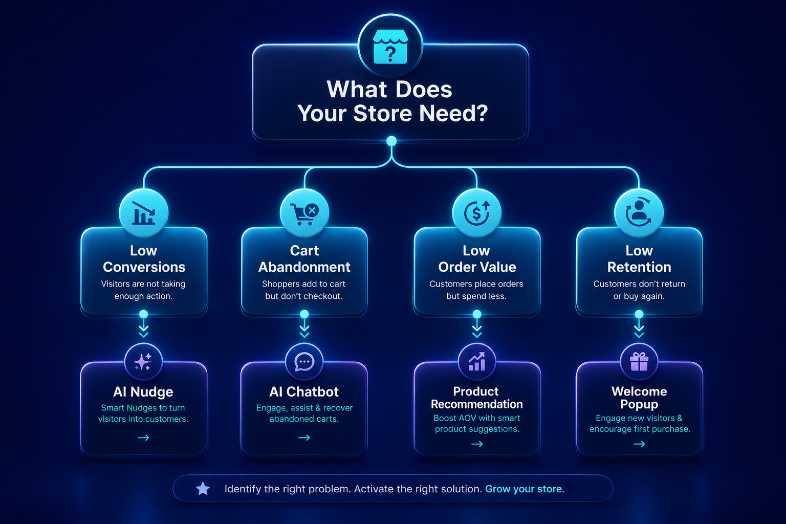
Do not make the mistake of installing dozens of apps simultaneously; excessive app configurations will degrade site performance. Instead, isolate your store's primary bottleneck:
- Low Conversion Rate? Prioritize AI shopping assistants like ReComAI and lightweight review solutions like Judge.me.
- High Abandoned Cart Rates? Implement a robust automation sequence via Klaviyo or Attentive.
- Weak Average Order Value? Introduce dynamic upsell funnels with Reconvert or Frequently Bought Together.
- Stagnant Return Purchase Rates? Launch a structured loyalty initiative utilizing Smile.io.
Final Thoughts
Building a dominant Shopify store in 2026 comes down to mastering three core elements: personalization, intelligent automation, and frictionless customer experiences.
By audit-proofing your store with these top-tier category applications, you give your brand the infrastructure it needs to convert more traffic, increase retention, and scale operations automatically.
Ready to turn more casual store visitors into confident buyers? Consider launching an AI-driven assistant like ReComAI to deliver the immediate, intelligent shopping journeys that modern consumers expect.
Frequently Asked Questions (FAQs)
Q: Do Shopify apps slow down your website?
A: They can if they are poorly coded or if you install too many. Prioritize apps that load scripts asynchronously and focus heavily on performance optimization.
Q: Can I run multiple upsell apps at the same time?
A: It is not recommended. Running competing upsell widgets can cause visual bugs, clutter your UI, and confuse shoppers. Choose one cohesive suite that covers your funnel.
Q: How many apps should an average Shopify store run?
A: Most successful scaling stores run between 10 to 20 highly optimized apps, depending entirely on the complexity of their supply chain and marketing needs.