A few years ago, Artificial Intelligence was something you only encountered in science fiction movies. Robots taking over the world, machines outsmarting humans, dystopian futures controlled by algorithms. It felt distant. Theoretical. Almost entertaining.
Today, it's a completely different story.
AI is picking your Netflix recommendations, helping oncologists detect tumors before symptoms appear, writing code faster than most junior developers, and powering the fraud detection systems protecting your bank account - all at the same time. It has quietly moved from the laboratory to the center of global civilization, and most of us didn't even notice it happening.
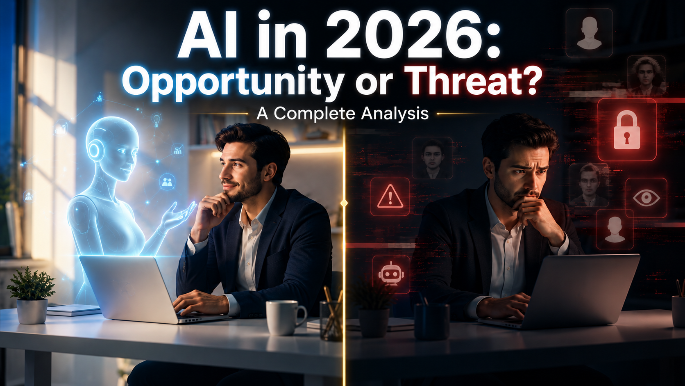
But with that integration comes a question that more and more people are asking out loud: Is Artificial Intelligence the greatest opportunity humanity has ever had - or are we building something we're fundamentally not prepared to control?
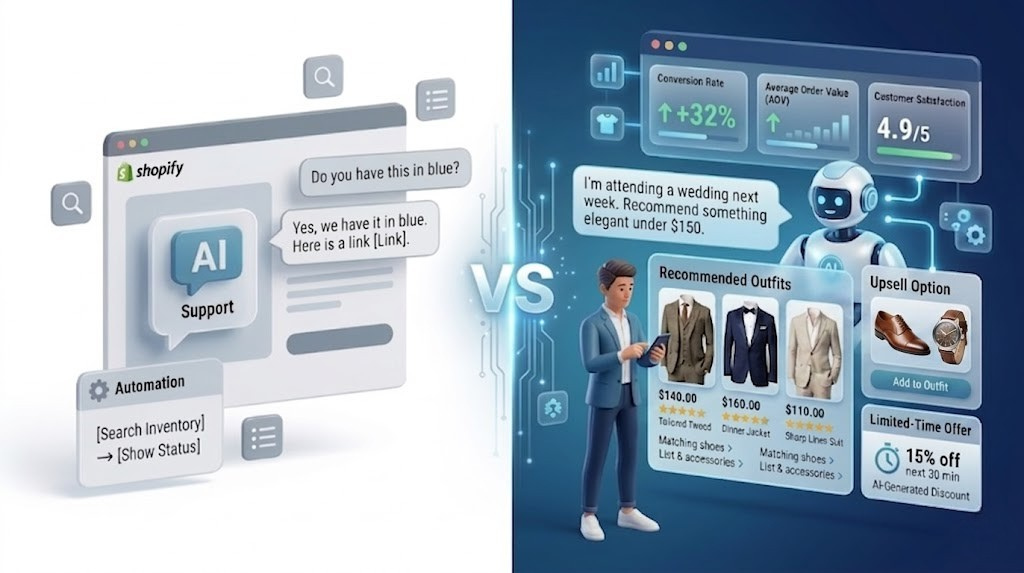
The honest answer isn't a clean yes or no. It's both, and understanding the nuance between the two is exactly what this article is here to help you do. Whether you're a business leader, a student thinking about your future career, or simply someone trying to make sense of the world changing around you - this is the complete picture. In ecommerce, platforms like ReComAI leverage these breakthroughs, offering dedicated solutions like the Shopify AI Agent, as well as specialized channels like the WhatsApp AI Sales Agent, Instagram AI Sales Agent, and Messenger AI Sales Agent to turn opportunities into revenue.
What Exactly Is AI? (Without the Jargon)
Before we get into the opportunities and risks, it helps to understand what we're actually talking about. "Artificial Intelligence" has become one of the most overused and misunderstood terms of our time.
At its core, AI is technology built to replicate human cognitive tasks - recognizing patterns, making decisions, understanding language, learning from experience - through software and hardware systems. It's not magic. It's advanced mathematics, vast datasets, and extraordinary computing power working together.
In 2026, AI operates across three broad levels of capability:
- Narrow AI (ANI) - highly specialized systems that do one specific task exceptionally well. Google Maps predicting traffic, spam filters in your email, fraud detection in banking. These systems are incredibly powerful within their domain, but they can't step outside it.
- General AI (AGI) - a system that can understand, reason, and apply intelligence across any task a human can perform. We're closer to this than ever before, but we haven't fully arrived yet. The lines are blurring fast.
- Super AI (ASI) - a theoretical future state where AI surpasses human intelligence across every dimension. This remains speculative, but it's what serious researchers are already thinking carefully about.

The biggest paradigm shift happening right now is the rise of Agentic AI - systems that don't just respond to your questions but autonomously plan, use external tools, break complex goals into steps, check their own work, and complete entire projects with minimal human input. This is no longer the AI that answers queries. This is AI that gets things done.
The Opportunity Side: Where AI Is Genuinely Changing the World
Healthcare and Medicine
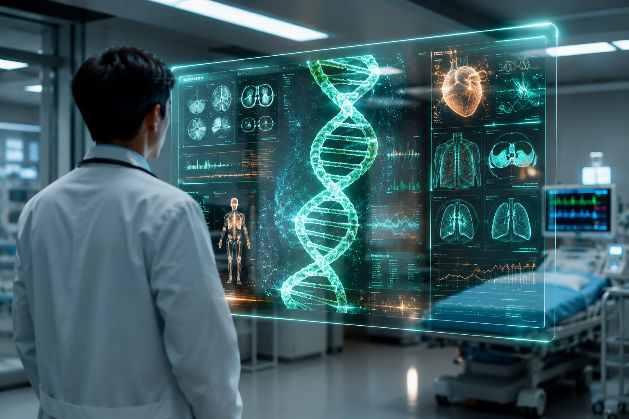
Perhaps nowhere is AI's potential more profound - or more life-saving - than in healthcare.
Google DeepMind's AlphaFold cracked the protein structure problem that had stumped scientists for fifty years, mapping the 3D configurations of over 200 million proteins. This single breakthrough unlocked new possibilities across drug discovery, disease research, and molecular biology.
Building on that foundation, AI platforms in 2026 are designing entirely novel drug molecules, running them through predictive simulations, and accelerating their path into clinical trials - compressing what used to take ten years into under eighteen months. Companies like Insilico Medicine and Exscientia are already doing this at scale.
But the transformation doesn't stop at drug discovery. AI-powered diagnostic tools are analyzing radiology scans, pathology reports, and genomic sequences to detect cancers, rare diseases, and chronic conditions earlier than any human specialist could. Wearable devices connected to medical AI models are beginning to monitor patients continuously, flagging anomalies in real time before they escalate into emergencies.
The future this points toward is medicine that shifts from reactive treatment to predictive, personalized prevention - healthcare built around your unique biology, not a statistical average.
Education and Equal Access to Knowledge

The traditional classroom model was designed for industrial-era standardization - same lesson, same pace, same format for every student. AI is dismantling that model and replacing it with something far more effective.
Khan Academy's Khanmigo functions as a patient, context-aware AI tutor that adapts to each student's comprehension level, learning pace, and cognitive gaps in real time. Rather than handing out answers, it guides students through problems using tailored Socratic dialogue, adjusting its approach based on how the student responds.
In 2026, AI-powered educational platforms are going further - analyzing not just whether a student got the answer right, but how long they paused, where their attention drifted, and which types of explanations resonate with their learning style. The result is genuinely personalized education at scale.
For the hundreds of millions of students globally who don't have access to quality teachers or private tutors, this technology represents something remarkable: a shot at world-class education regardless of geography, income, or circumstance.
Sustainable Agriculture and Food Security
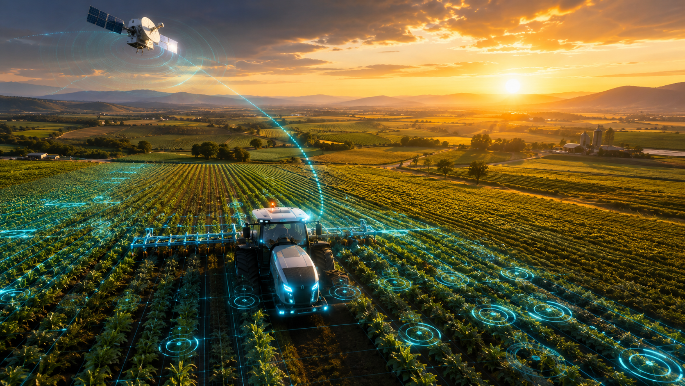
Feeding a global population of eight billion people - sustainably - is one of the defining challenges of our era. AI is becoming one of the most powerful tools we have to address it.
John Deere's precision agriculture systems integrate computer vision AI into autonomous farm equipment that scans individual crop leaves in real time. Instead of blanket-spraying entire fields with herbicides or fertilizers, these systems identify specific plants that need treatment and apply micro-doses with surgical precision - reducing chemical usage and cutting agricultural water consumption by over 30%.
At a macro level, satellite-linked AI platforms monitor soil moisture, canopy temperature, and regional weather patterns to coordinate automated irrigation networks across large farming regions. The compounding effect of these technologies on global food security - particularly in drought-prone regions - is substantial.
Enterprise Operations and Business Efficiency

For modern businesses, AI has moved from a peripheral experiment to a core operational architecture.
Organizations deploying autonomous multi-agent AI systems are reducing administrative processing costs by up to 70%. What used to require teams of people manually routing documents, reconciling accounts, and processing invoices now runs automatically across integrated ERP systems.
Customer service has been fundamentally transformed. Advanced conversational AI engines that understand emotional nuance, technical context, and customer history now resolve up to 80% of tier-one support inquiries instantly - without the frustrating rigidity of old chatbots.
Meanwhile, marketing platforms powered by AI dynamically build hyper-personalized campaigns, updating buyer intent signals in real time and generating custom content tailored to individual customer profiles.
At the strategic level, AI gives executives something dashboards never could: forward-looking intelligence. Instead of reviewing what happened last quarter, leaders now have access to predictive analytics that model future risks, competitive shifts, and market trends before they materialize.
Climate and Clean Energy
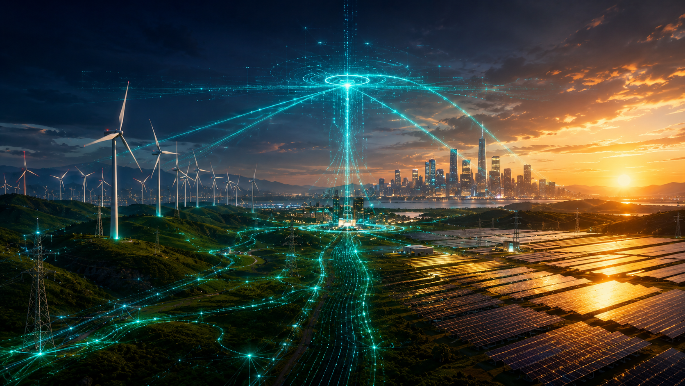
The energy transition is one of the most complex logistical challenges humanity has ever attempted, and AI is proving to be an essential accelerant.
Deep learning models are processing satellite imagery, atmospheric data, and oceanographic telemetry to forecast extreme weather events at hyper-local scales, giving communities early warning windows that save lives and reduce infrastructure damage.
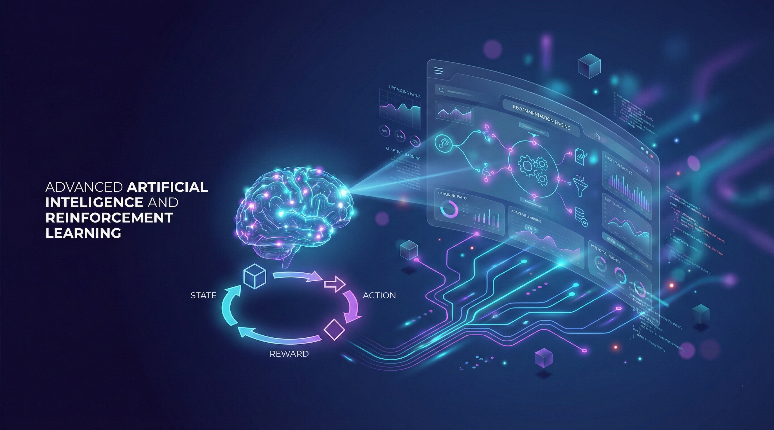
National power grids are using agentic AI to balance electricity distribution across renewable wind and solar sources in real time - predicting regional demand spikes, optimizing battery storage, and reducing reliance on fossil-fuel backup plants. At the research frontier, reinforcement learning models are managing the magnetic containment fields inside nuclear fusion reactors, helping scientists inch closer to clean, limitless energy generation.
The Threat Side: What We Can't Afford to Look Away From

Job Displacement - More Complicated Than You Think
This is the fear that dominates headlines, and it's not unfounded. When an AI system can write production-ready code, draft legal contracts, compile financial analyses, and generate professional marketing content at a fraction of human cost and time, the labor market faces a structural shock that's unlike anything previous industrial revolutions produced.
Past technological transitions - steam power, electricity, computing - ultimately created more jobs than they eliminated. But those transitions unfolded over decades, giving education systems and economies time to adapt. The critical difference with AI is velocity. It's moving faster than our institutions can respond.
Junior software developers, paralegals handling document review, data entry specialists, entry-level analysts, and standard customer support operators are all facing meaningful displacement pressure right now - not in some abstract future.
The risk isn't that AI eliminates all work. It's that the transition will be painful and unequal, benefiting those with capital and advanced skills while leaving others without a clear path forward if retraining systems aren't urgently scaled.
Deepfakes, Disinformation, and the Collapse of Shared Truth
Generating a photorealistic video of a political leader saying something they never said. Cloning the voice of a CEO to authorize fraudulent wire transfers. Mass-producing thousands of unique, targeted misinformation articles in seconds.
All of this is now accessible, fast, and cheap.
When deepfake technology reaches the point where the average person cannot reliably distinguish real from fabricated - and we're close to that threshold - the foundational trust that democratic societies depend on comes under serious pressure. This isn't a hypothetical future risk. Documented cases of voice-cloning fraud, synthetic media used in geopolitical influence operations, and AI-generated misinformation campaigns are already on record.
Privacy Erosion and Surveillance at Scale
AI systems require data - enormous amounts of it - to function at high precision. That data comes from us. Our location history, browsing behavior, purchase patterns, social connections, and even our physical appearance captured by facial recognition systems.
The uncomfortable reality is that most people have no meaningful understanding of how much of their personal data is being collected, processed, and monetized. We accept "Terms and Conditions" we don't read and grant permissions we don't think about. The long-term consequences of living inside algorithmic surveillance infrastructure are still unfolding - and they deserve far more public attention than they currently receive.
Algorithmic Bias and the Scale of Injustice
Machine learning models learn from historical data. Historical data reflects historical inequalities. That means if you train an AI hiring tool on decades of employment records from a male-dominated industry, the system will systematically disadvantage women - not because anyone programmed it to, but because the data told it to.
This kind of algorithmic bias has already been documented in hiring tools, loan approval systems, facial recognition technology, and criminal risk assessment software. The problem isn't just that these systems make biased decisions - it's that they make those decisions at a scale and speed that amplifies bias far beyond what any individual decision-maker could.
Cybersecurity and the Weaponization of Intelligence
Malicious actors are using AI to scan enterprise codebases for zero-day vulnerabilities, generate polymorphic malware that changes its signature to evade detection, and design hyper-targeted phishing campaigns that feel alarmingly personal and legitimate.
Voice cloning software is being weaponized to impersonate family members, executives, and financial advisors in sophisticated fraud operations. On an international scale, autonomous systems are increasingly integrated into military infrastructure, raising serious and unresolved questions about the ethics and governance of AI in warfare.
Is Your Career Actually at Risk? An Honest Framework
The question isn't whether AI will change your industry - it will. The question is how it will change your specific role, and what you can do about it now.
Roles under the most displacement pressure:
- Repetitive data processing and administrative entry
- Basic legal document review and contract summarization
- Scripted, tier-one customer support
- Junior-level report generation and data analysis
- Templated content writing without strategic direction
Roles that are resilient and growing:
- Complex problem-solving that requires cross-domain judgment
- Mental health, counseling, and deep human connection
- Skilled trades - electricians, plumbers, structural carpenters
- Strategic leadership and organizational decision-making
- Roles that direct, manage, and audit AI systems themselves
- Creative direction with genuine original perspective
The single most actionable career insight of this era: professionals who develop the ability to work effectively alongside AI - understanding what it can do, where it fails, and how to direct it - will have a decisive advantage over those who either ignore it or try to compete with it head-on.
How the World Is Trying to Govern AI
The regulatory landscape has matured significantly, though it remains a work in progress.
The EU AI Act is the world's first comprehensive legal framework for artificial intelligence. It organizes AI applications by risk level. Unacceptable risk systems - including real-time mass biometric surveillance in public spaces and social scoring - are banned outright. High-risk applications in healthcare, critical infrastructure, recruitment, and criminal justice face mandatory compliance audits, human oversight requirements, and strict transparency standards.
The United States has implemented executive mandates requiring developers of powerful foundation models to share safety testing results with federal bodies including NIST. Further legislative frameworks are in development.
Globally, the UN Advisory Body on AI and the OECD are actively working to harmonize cross-border governance standards, aiming to prevent a regulatory race to the bottom where the least restrictive jurisdictions become havens for unsafe AI development.
The honest assessment: regulation is moving, but it's still running behind the technology. Closing that gap is one of the most important policy challenges of the next five years.

Looking Ahead: 2026 to 2035
The next decade will likely bring changes more significant than the last twenty years of the internet combined.
Humanoid robotics will move from testing environments into active deployment in manufacturing, logistics warehouses, and retail operations. Companies like Tesla (Optimus), Figure, and Agility Robotics are already in early stages of commercial deployment.
Personal AI agents will manage your schedule, negotiate contracts, monitor your health metrics, and coordinate your logistics - communicating directly with other AI agents to complete complex multi-step tasks without you needing to intervene.
Healthcare will shift toward continuous predictive monitoring. Real-time bio-telemetry from wearables will catch chronic diseases at the molecular level before symptoms ever appear, and custom genomic treatments will become far more widely accessible.
Education will evolve into fully immersive, adaptive learning environments where every student has a personalized curriculum powered by real-time generative media - making world-class education genuinely accessible regardless of location or economic background.
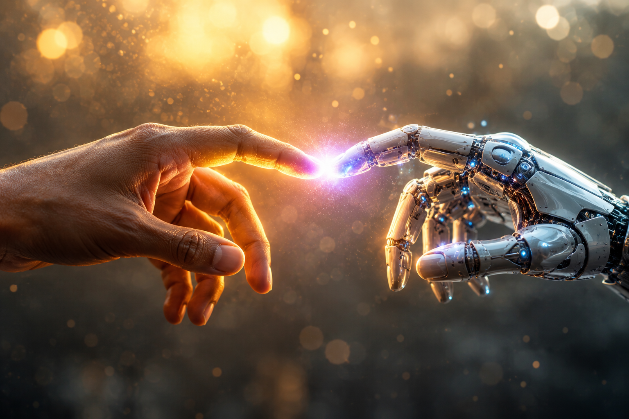
The Bottom Line: AI Is a Mirror
Here is perhaps the most important thing to understand about Artificial Intelligence, beyond all the technical details and economic projections:
AI is not inherently good or bad. It is an amplifier.
It reflects the values, priorities, biases, and intentions of the civilization building and deploying it. Point it at greed and short-term thinking, and it will accelerate inequality and systemic instability. Point it at genuine human welfare, with clear ethical guardrails and broad accessibility, and it becomes one of the most powerful forces for human progress ever created.
The responsibility for that choice doesn't sit with the algorithms. It sits with the builders, executives, policymakers, educators, and citizens shaping how this technology develops and who it serves.
The most important thing you can do right now isn't to pick a side in a binary debate. It's to stay informed, stay engaged, and make sure the humans designing this future are accountable to the rest of us.
Frequently Asked Questions (FAQs)
Which side of this conversation do you find yourself on? Is AI the opportunity of a generation, or the risk we're not taking seriously enough? Share your perspective in the comments below.
Keywords