What Exactly Are AI Agents?
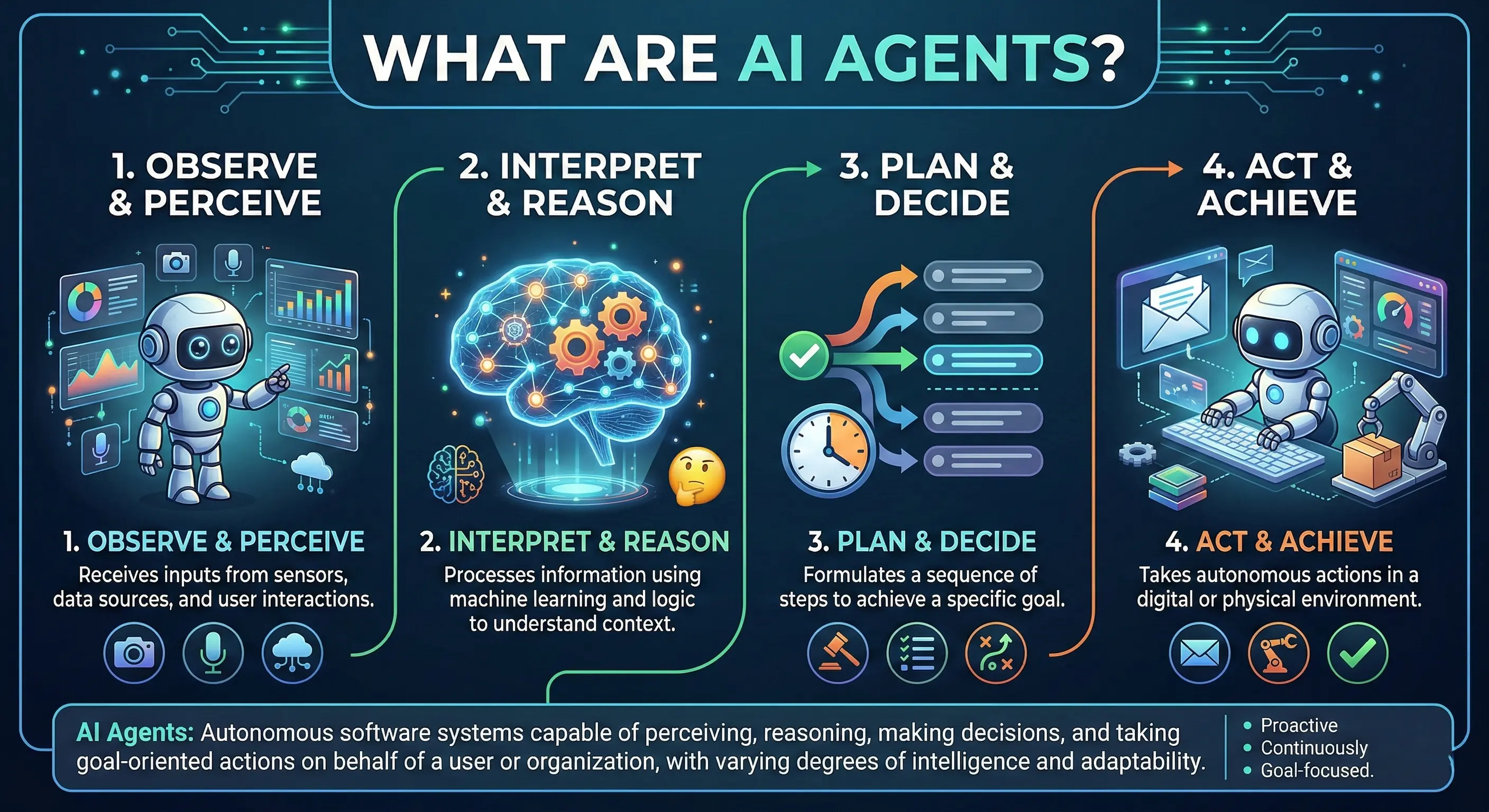
AI agents are sophisticated AI systems capable of autonomous decision-making, learning, and task execution, distinguishing them from traditional automation by their enhanced cognitive abilities. They operate by processing information, identifying patterns, and performing multi-step processes with minimal human oversight. This allows them to handle complex job functions that go beyond simple pre-programmed rules.
Unlike basic automation or Robotic Process Automation (RPA), AI agents possess advanced reasoning and problem-solving skills. They can understand context, adapt to new situations, and even learn from their interactions. This makes them far more versatile and powerful than the rule-based systems of the past. For example, an AI agent can process unstructured data like emails or voice recordings, then decide on the best course of action.
These advanced capabilities mean AI agents are not just following instructions; they are making informed choices. They can handle dynamic environments, where conditions change frequently, and execute complex tasks that require a degree of intelligence. This shift represents a significant leap in how AI interacts with and contributes to the workforce.
Key Capabilities and Trends in 2026
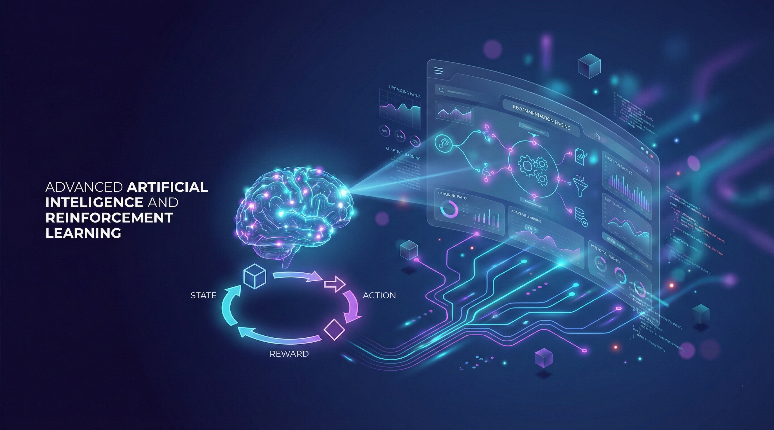
The widespread adoption of AI agents is driven by their enhanced cognitive abilities, allowing them to process vast amounts of data, identify patterns, and perform predictive analytics. These capabilities enable them to tackle tasks that require more than just simple data processing, moving into areas of analysis and foresight. (For a deep dive into the technology powering these advances, see Reinforcement Learning and ReComAI.)
A key trend in 2026 is the proliferation of specialized AI agents designed for specific industry functions. We see agents tailored for healthcare, finance, or logistics, each optimized for the unique demands of its sector. This specialization makes them incredibly effective at their designated job roles.
Another significant trend is the integration of AI agents into collaborative human-AI teams. Humans and AI are increasingly working side-by-side, with AI handling routine or data-intensive tasks, and humans focusing on strategic oversight and creative problem-solving. This partnership boosts overall productivity and efficiency.
The development of more intuitive interfaces for managing these digital workers is also crucial. This makes it easier for human employees to interact with, monitor, and direct AI agents, fostering smoother collaboration. The focus is increasingly on AI agents that can handle unstructured data and dynamic environments, making them suitable for a wider array of job roles.
The Front Lines of Automation: 5 Job Roles AI Agents Are Replacing

1. Data Entry & Administrative Support Specialists
AI agents are taking over routine administrative and data management tasks by automating data entry, record keeping, and document extraction with high accuracy and speed. They can quickly process information from various sources, reducing the need for manual input and minimizing errors. This frees up human staff for more complex work.
These AI agents can also manage scheduling, appointments, and email correspondence efficiently. They can analyze incoming emails, prioritize them, and even draft responses based on common queries. This streamlines daily operations for many businesses, making administrative processes much faster.
For example, AI-powered virtual assistants are now autonomously managing calendars, transcribing meetings, anBeyond Replacement: How AI Agents Are Reshaping Worked generating reports. They can listen to a meeting, summarize key points, and distribute action items without human intervention. This significantly reduces the workload for administrative support specialists, allowing them to focus on strategic planning and interpersonal tasks.
2. Customer Service Representatives
Initial customer support is increasingly handled by AI agents, which manage frequently asked questions, troubleshoot common issues, and guide customers through standard procedures. These AI-powered chatbots and virtual assistants provide instant responses, improving customer satisfaction and reducing wait times. They are available 24/7, offering consistent support.(To understand this shift, explore How AI Is Changing Customer Experience in 2026 and get the fundamentals from AI Chatbots Explained: From Basics to Business Values).
These advanced AI agents utilize sophisticated natural language understanding (NLU) to provide personalized support across multiple channels. Whether it's through chat, email, or voice, they can understand customer intent and respond appropriately. This makes interactions feel more natural and effective.(You can learn to Step-by-Step: Deploy Your First AI Bot on WordPress or Website).
The ability of AI agents to resolve a high percentage of inquiries means human customer service representatives can focus on complex or unique cases. AI handles the routine, freeing up humans for empathy-driven problem-solving and relationship building. This creates a more efficient and responsive customer service ecosystem.
3. Basic Financial Data Analysts & Bookkeepers
AI agents are transforming fundamental financial analysis and bookkeeping functions by automating tasks like transaction categorization, account reconciliation, and invoice processing. They can quickly sort through vast amounts of financial data, ensuring accuracy and compliance. This significantly speeds up financial operations.
These AI systems are also adept at generating preliminary financial reports, identifying discrepancies, and flagging potential fraud. They can spot unusual patterns in transactions that might indicate a problem, providing an early warning system for businesses. This enhances financial security and regulatory compliance.
The impact is clear: AI allows human financial professionals to focus on higher-level strategic analysis, forecasting, and complex problem-solving. Instead of spending hours on data entry, they can use their expertise to interpret AI-generated insights and make informed business decisions. This elevates the role of the human analyst.
4. Repetitive Manufacturing & Assembly Line Workers
AI-driven robotic agents are replacing human labor in industrial settings by taking over highly repetitive and physically demanding assembly line tasks. These robots are designed for precision and endurance, performing the same actions flawlessly for extended periods. This reduces human fatigue and potential for error.
Their capabilities include precise movements, continuous operation, and adaptation to minor variations in production lines. If a component is slightly out of place, the AI robot can often adjust its actions to compensate. This flexibility ensures smooth production even with small inconsistencies.
The benefits of this deployment are substantial: enhanced safety, reduced error rates, and increased production throughput. Robots can work in hazardous environments without risk to human life, and their consistent performance leads to higher quality products. While human oversight and maintenance roles remain crucial, the direct involvement in repetitive assembly is significantly reduced, shifting the workforce towards more specialized technical roles.
5. Initial Content Moderation Specialists
AI agents assist in the initial screening and moderation of online content by rapidly analyzing vast quantities of text, images, and videos. They identify and flag content that violates platform guidelines, such as hate speech, misinformation, or graphic material. This process is much faster than human review alone.
This capability leads to a significant reduction in the volume of content requiring human review. AI acts as a first line of defense, catching the most obvious violations. This allows human moderators to focus their attention on more nuanced or complex cases that require human judgment and understanding of context.
The use of AI improves the speed and consistency of moderation efforts across platforms. It ensures that guidelines are applied uniformly, reducing subjective bias in initial screenings. While human moderators are still essential for nuanced judgments, AI agents make the overall moderation process more efficient and scalable, protecting online communities more effectively.
Beyond Replacement: How AI Agents Are Reshaping Work
The Rise of Human-AI Collaboration
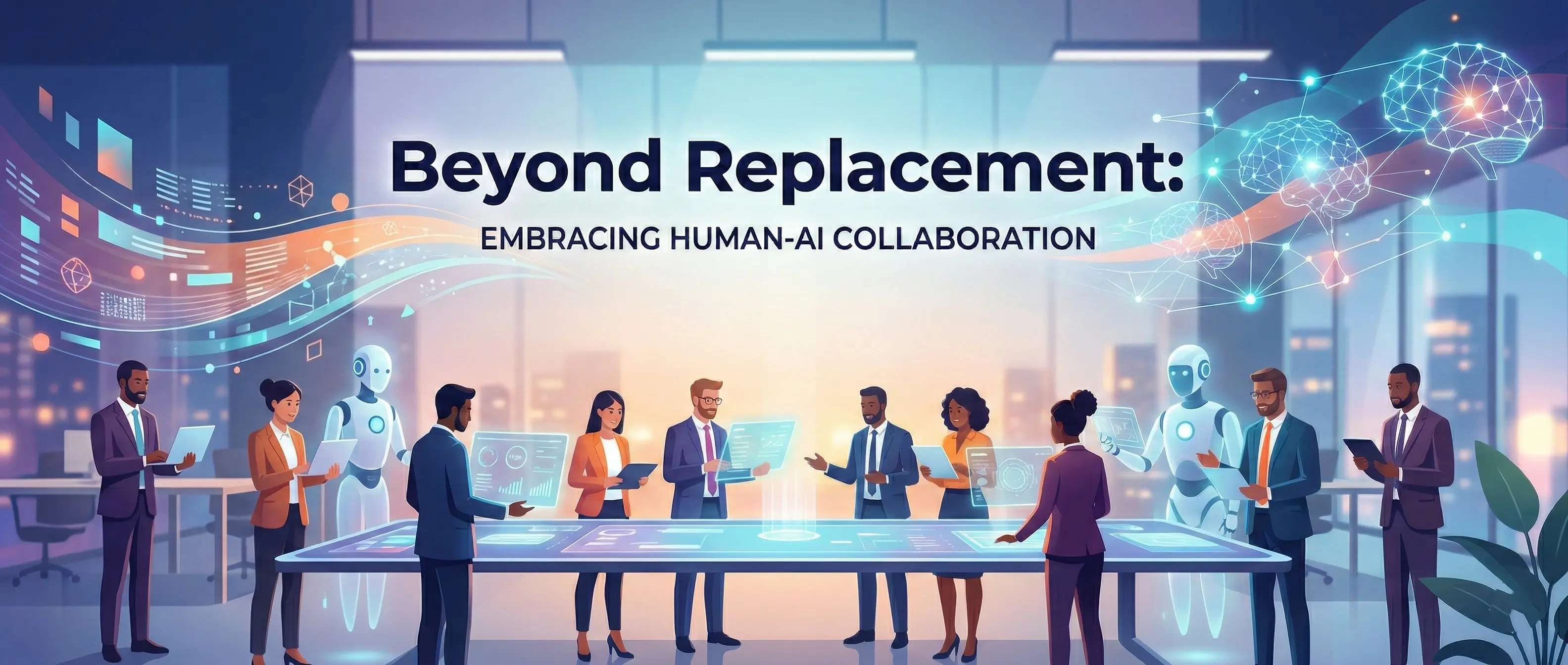
Humans and AI agents are increasingly working together to achieve superior outcomes, with AI serving as a powerful augmentation tool rather than solely a replacement. This collaboration enhances human capabilities, allowing individuals to perform tasks with greater speed, accuracy, and insight. It's about combining strengths.
Examples of collaborative workflows are becoming common across industries. AI might provide deep data insights for human decision-making, sifting through massive datasets to highlight critical information. Meanwhile, AI handles routine, time-consuming tasks, freeing humans to focus on strategic thinking, creativity, and complex problem-solving.
This synergy combines AI's unparalleled speed and data processing power with uniquely human attributes like creativity, emotional intelligence, and ethical reasoning. The result is a more productive and innovative workforce. This partnership allows organizations to achieve results that neither humans nor AI could accomplish alone.
Creating New Job Categories and Hybrid Roles
New professional opportunities are emerging as a direct result of AI agent integration, leading to the creation of entirely new job categories. These roles focus on the development, maintenance, and ethical oversight of AI systems. For instance, AI developers, data scientists, and machine learning engineers are in high demand.This shift is seen across sectors, from finance to beauty, where AI is transforming roles like the in-store consultant. (For an example of this change, read Beyond Skin Deep: How AI Analysis is Replacing the In-Store Beauty Consultant.)
We're also seeing the rise of AI strategists and prompt engineers, who specialize in designing effective interactions with AI and maximizing its output. These roles require a deep understanding of AI's capabilities and how to best utilize them for business goals. They bridge the gap between human needs and AI functionality.
Furthermore, hybrid roles are becoming more prevalent, where humans manage or oversee teams of AI agents. Imagine a human customer service agent managing a fleet of chatbots, intervening only when complex issues arise. Or a financial analyst leveraging AI tools for advanced predictive modeling, using AI to enhance their own analytical power. These roles emphasize human-AI interface and management.
Your Career in the AI Era: Implications for Individuals

The Imperative of Reskilling and Upskilling
Continuous learning is crucial for individuals navigating an AI-driven job market because the demands of job roles are constantly evolving. What was a valuable skill yesterday might be automated by AI tomorrow, making adaptability key. Individuals must proactively update their skill sets to remain competitive.
This means acquiring skills in AI management, data interpretation, and human-AI collaboration. Understanding how to work with AI tools, interpret their outputs, and effectively manage AI agents will be essential. Advanced analytical techniques are also becoming more important as AI handles basic data processing.
Educational institutions and corporate training programs are increasingly focusing on these areas to prepare the workforce. Online courses, certifications, and specialized degrees are readily available to help individuals gain these new competencies. Embracing reskilling and upskilling is no longer optional; it's a necessity for career longevity.
Focusing on Uniquely Human Skills
Certain human attributes and skills remain vital and less susceptible to AI replacement, providing a competitive edge in the evolving job market. These are the skills that AI struggles to replicate, such as creativity, critical thinking, and complex problem-solving. Humans excel at generating novel ideas and navigating ambiguous situations.
Emotional intelligence is another paramount skill, encompassing empathy, communication, and negotiation. AI can process information, but it cannot genuinely understand or respond to human emotions in the same nuanced way. These interpersonal skills are crucial for leadership, team collaboration, and client relations.
Innovation, strategic decision-making, and ethical reasoning also fall into this category. While AI can provide data and predictions, the ultimate responsibility for strategic direction and moral choices rests with humans. These uniquely human skills will define the most valuable job roles in an AI-augmented world.
Strategic Career Planning for an AI-Augmented Future
Individuals can proactively plan and adapt their careers amidst the rise of AI agents by first assessing their current skill sets against future job market demands. Understanding which skills are becoming obsolete and which are gaining importance is the first step. This self-assessment helps identify gaps.
Next, it's crucial to identify growth areas and pursue relevant certifications or degrees. This might involve learning a new programming language, specializing in AI ethics , or gaining expertise in data analytics. Investing in education and training is an investment in future employability.
Networking, mentorship, and staying informed about industry trends are also vital. Connecting with professionals in emerging fields and seeking guidance from experienced mentors can provide invaluable insights. Regularly reading industry reports and attending workshops helps individuals stay ahead of the curve, ensuring their career path remains relevant in an AI-driven future.
Navigating the Challenges: Ethical and Societal Considerations
Addressing Job Displacement and Economic Inequality
One of the primary societal risks associated with widespread AI agent adoption is the potential for widespread job displacement, particularly in sectors with a high proportion of routine tasks. As AI takes over these job roles, many individuals may find their skills are no longer in demand. This can create significant economic disruption.
This displacement could exacerbate economic inequality if adequate measures for workforce transition and social safety nets are not in place. Those without the means or opportunity to reskill may fall behind, widening the gap between different segments of society. This is a serious concern for policymakers.
Governments and organizations are exploring various mitigation policies, such as universal basic income (UBI) to provide a safety net, and extensive retraining programs to help workers acquire new skills. The goal is to ensure a smoother transition for the workforce and prevent widespread hardship, fostering a more equitable future.
Ensuring Ethical AI and Mitigating Bias
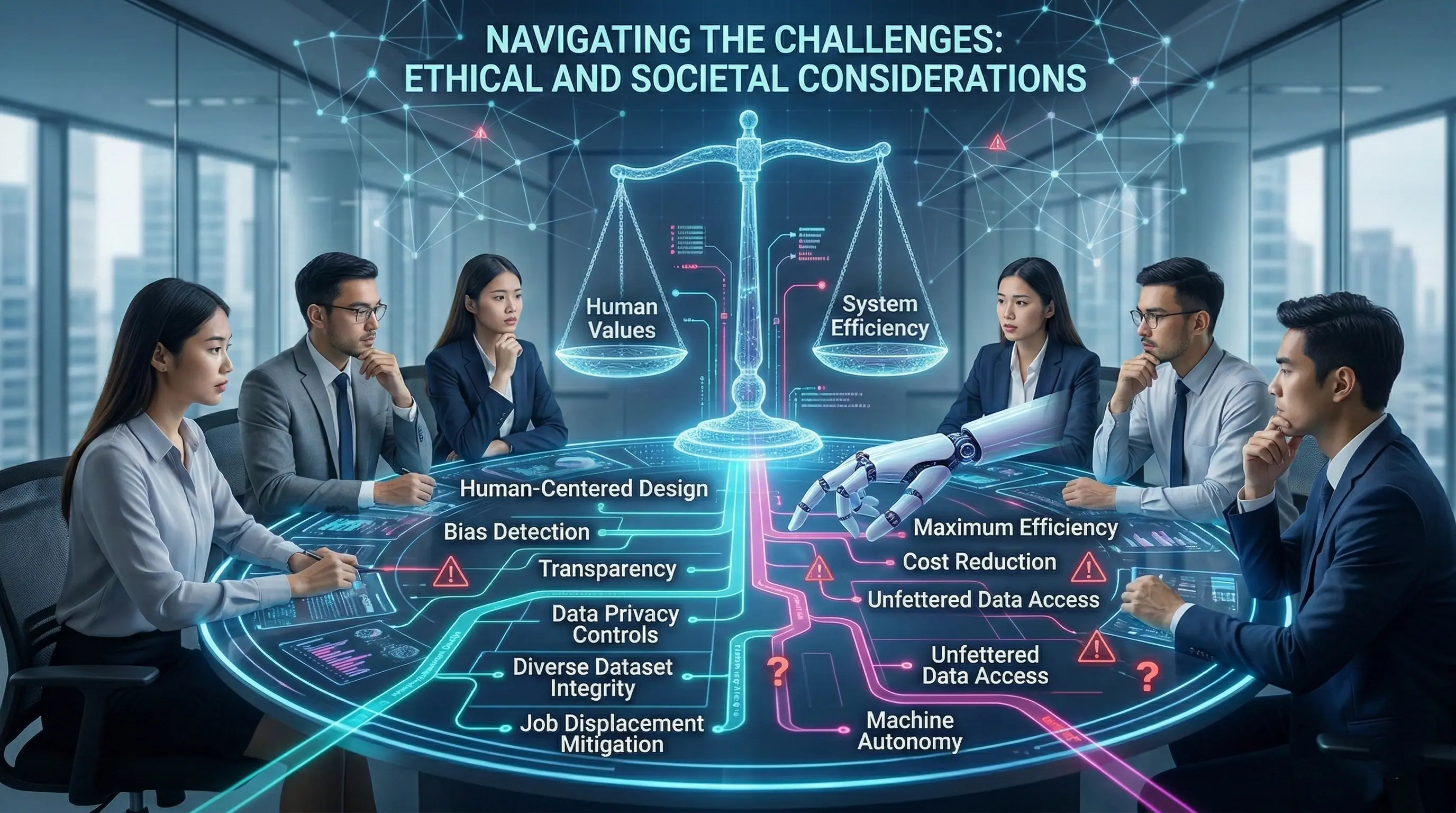
Ensuring that AI agents operate fairly, transparently, and without perpetuating biases is a critical challenge. AI systems are trained on vast datasets, and if that data reflects existing societal prejudices, the AI can learn and even amplify those biases. This can lead to discriminatory outcomes in areas like hiring or loan applications. (For a deeper look, see Ethical AI Governance: Navigating Bias and Privacy in 2026.)
Developing robust ethical AI frameworks is paramount to prevent such issues. These frameworks guide the design, development, and deployment of AI systems, emphasizing fairness, accountability, and transparency. Rigorous testing protocols are also essential to identify and correct biases before AI agents are widely deployed.
Transparency in AI decision-making processes is crucial so that humans can understand how an AI arrived at a particular conclusion. Furthermore, ensuring diverse teams in AI development and oversight helps bring different perspectives, reducing the likelihood of unconscious biases being embedded in the technology. This multi-faceted approach is vital for responsible AI integration.
6.Frequently Asked Questions (FAQs)
Q: Will AI agents eventually replace all human jobs?
A: No, AI agents are unlikely to replace all human jobs. While they excel at repetitive, data-intensive tasks, uniquely human skills like creativity, emotional intelligence, critical thinking, and complex problem-solving remain difficult for AI to replicate. The future likely involves human-AI collaboration, with AI augmenting human capabilities and creating new job roles.
Q: What industries are most susceptible to AI agent job replacement?
A: Industries with a high proportion of routine, predictable, and data-intensive tasks are most susceptible. This includes sectors like administrative support, basic customer service, manufacturing (repetitive assembly), and entry-level financial data processing. However, even in these areas, complex or nuanced tasks often still require human oversight and intervention.
Q: How can I protect my current job from AI automation?
A: To protect your job from AI automation, focus on reskilling and upskilling in areas that complement AI, such as AI management, data interpretation, and human-AI collaboration. Cultivate uniquely human skills like creativity, critical thinking, emotional intelligence, and strategic decision-making. Embrace lifelong learning and view AI as a tool to enhance your productivity.
Q: Are AI agents the same as robots, or is there a difference?
A: AI agents are not exactly the same as robots, though they can overlap. An AI agent is a software system capable of autonomous decision-making and learning. A robot is a physical machine designed to carry out tasks. An AI agent can control a robot, giving it intelligence, but an AI agent can also exist purely as software, like a chatbot or a data analysis program.
Q: What are the most significant ethical concerns regarding AI replacing jobs?
A: The most significant ethical concerns include widespread job displacement and the potential for increased economic inequality if workforce transition measures are inadequate. There are also concerns about ethical AI and bias, ensuring AI systems don't perpetuate societal prejudices, and protecting data privacy and security given AI's need for vast amounts of information.
Conclusion
The year 2026 marks a pivotal moment in the evolution of the workforce, with AI agents increasingly taking over specific job roles and transforming the nature of work itself. We've seen how AI is actively replacing tasks in data entry, customer service, financial analysis, manufacturing, and content moderation. This shift, while challenging, also unlocks unprecedented opportunities for efficiency, innovation, and the creation of new, more strategic human roles.
For individuals, the key takeaways are clear: embrace continuous learning, focusing on uniquely human skills like creativity, critical thinking, and emotional intelligence. These attributes provide a competitive advantage that AI cannot replicate. Furthermore, learning to collaborate effectively with AI agents will be essential, viewing them as powerful tools that augment our capabilities.
The future of work is not about humans vs. AI, but humans with AI. By adapting strategically, individuals and organizations can navigate this AI-driven future to build a more efficient, innovative, and ultimately, more human-centric workforce. This proactive approach will ensure we thrive in the evolving professional landscape.