
You probably started with TIDIO for the same reason most Shopify merchants do. It's powerful, it's well-known, and the promise of AI-driven personalization sounds exactly like what your store needs. But then the invoice arrives. Or you realize the setup requires a developer. Or you notice the recommendations aren't quite matching your store's actual buying patterns.
Sound familiar?
I've been there. So I spent weeks testing six of the most talked-about TIDIO alternatives running them against real eCommerce metrics: conversion lift, average order value (AOV) impact, ease of setup, and pricing sanity. No fluff. No guesswork.
This guide gives you everything I found, so you can make the switch without trial-and-error.
1. What Do AI Product Recommendation Tools Actually Do?
Let's be clear on what we're actually comparing here.
Modern AI recommendation platforms aren't just "also bought" widgets pasted on a product page. The best ones do several things simultaneously and the difference between a basic one and a smart one is measured directly in revenue.

Here's what a strong recommendation engine covers:
- Real-time behavioral tracking:watching what each shopper clicks, lingers on, adds to cart, and abandons
- Upsell and cross-sell nudges:surfacing the right product at the right moment (cart page, product page, post-purchase)
- Personalized homepage and collection pages:showing each visitor a different "store" based on their profile
- AI chatbot integration:answering product questions and recommending items through conversation
- Revenue attribution:telling you exactly how much money the AI actually drove, not just assisted
The tools that do all of this well are the ones worth paying for. The tools that do one thing adequately are the ones you'll eventually migrate away from.
Why Shopify Merchants Look for TIDIO Alternatives
TIDIO is a capable platform. But it consistently comes up short in three specific ways and those gaps are exactly why you're reading this.
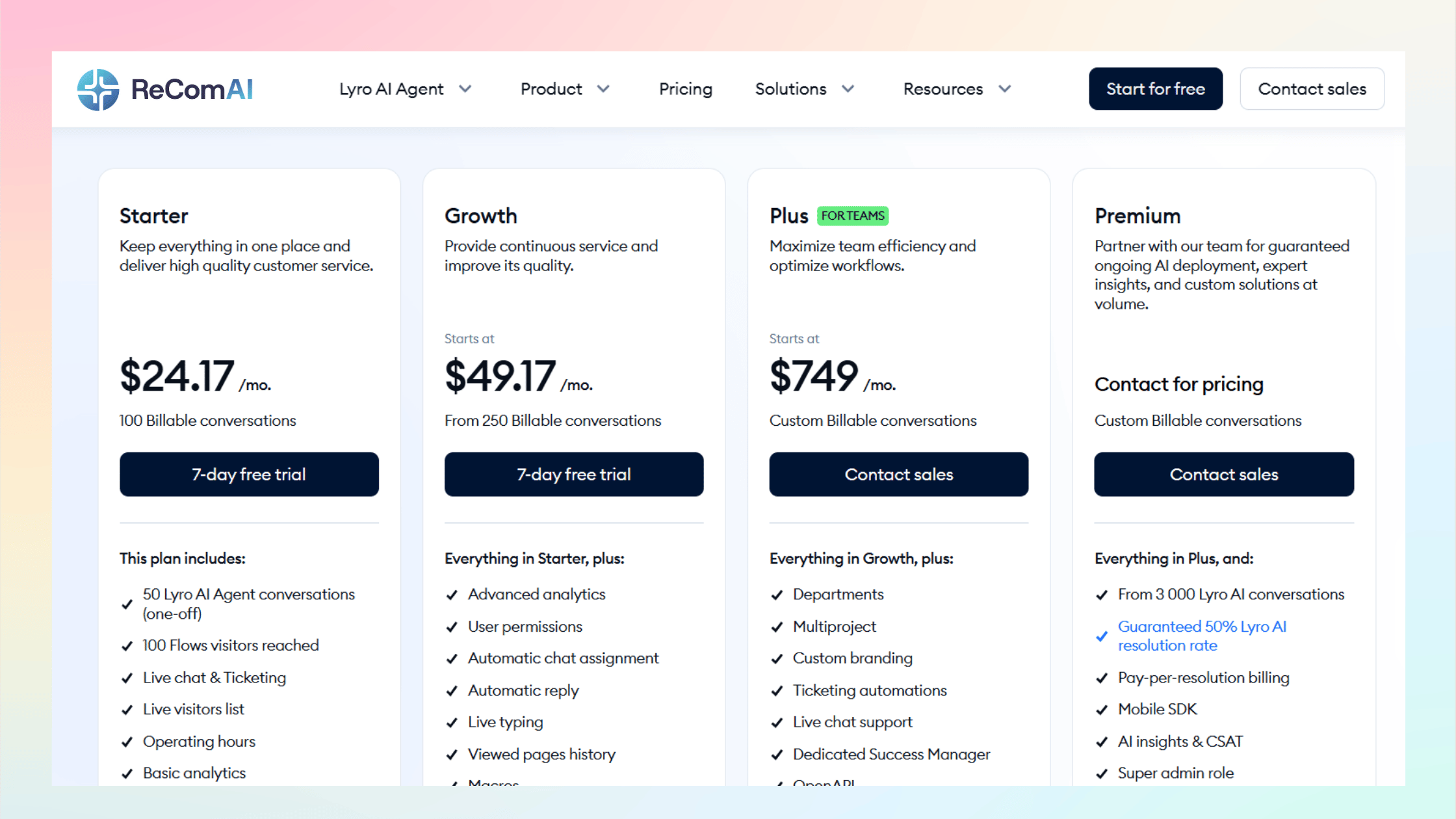
The pricing scales faster than your margins
Rebuy's pricing is tied to your store's revenue, not your usage. That sounds fair in theory. In practice, it means your tool costs more every time your marketing works. The Starter plan starts at $99/month for stores doing up to $1M/year in revenue, jumping to $249/month for $2M+ stores before you've added a single advanced feature.
For DTC brands running on lean margins, that's a painful bill for something that should be helping improve profitability.
Setup requires developer time
To unlock Rebuy's full personalization stack Smart Cart, dynamic bundles, post-purchase offers you need to touch code. Most Shopify merchants don't have an in-house dev. Hiring one to configure a recommendations app is the last thing a lean team wants to deal with.
The AI doesn't learn your catalog deeply enough
Rebuy's recommendations work well for large catalogs with strong historical sales data. But for newer stores, niche products, or beauty brands with ingredient-specific SKUs, the default algorithms surface generic "best sellers" that don't match actual shopper intent.
My Criteria for Evaluating Each Tool
I didn't test these tools based on marketing promises. Here's the exact framework I used:
- Time to first recommendation live:Can a non-technical merchant get this running in under an hour?
- Personalization depth:Does the AI actually learn individual shopper behavior, or is it just sorting by best-sellers?
- AOV and conversion impact:Is there measurable proof from real stores that it moves the needle?
- Placement flexibility:Can you show recommendations on product pages, cart, checkout, post-purchase, and via chatbot?
- Pricing predictability:Is the pricing model fair as you scale, or does it penalize growth?
- Support and onboarding:What happens when something breaks at 11pm on a Friday?
Quick Comparison: Best TIDIO Alternatives in 2026
| Tool | Best For | Pricing Model | AI Chatbot Included? | No-Code Setup? |
|---|---|---|---|---|
| ReComAI | Full-stack AI personalization for Shopify, WooCommerce & Magento | Flat monthly plans | ✅ Yes (24/7) | ✅ Yes |
| LimeSpot | Mid-size Shopify stores wanting visual merchandising control | Per-plan tiers | ❌ No | ✅ Yes |
| Frequently Bought Together | Budget-conscious merchants needing simple cross-sells | One-time / flat fee | ❌ No | ✅ Yes |
| Visually | Stores wanting A/B testing + personalization combined | Custom pricing | ❌ No | ⚠️ Partial |
| Also Bought | Amazon-style "customers also bought" for Shopify | Flat monthly | ❌ No | ✅ Yes |
| Bold Commerce | Enterprise merchants needing subscriptions + upsells | Per-feature pricing | ❌ No | ⚠️ Partial |
Detailed Reviews of All 6 Alternatives
1. ReComAI Best Overall TIDIO Alternative
Who it's for: Shopify, WooCommerce, and Magento merchants who want an AI-powered personalization engine and a 24/7 sales chatbot without hiring a developer or paying per-resolution fees.
ReComAI is built by Destinova AI Labs and is already trusted by 100+ Shopify stores, with over $2M in merchant revenue directly attributed through its dashboard. It's not just a recommendation widget it's a full revenue intelligence layer for your store.
Why it's the strongest TIDIO alternative:
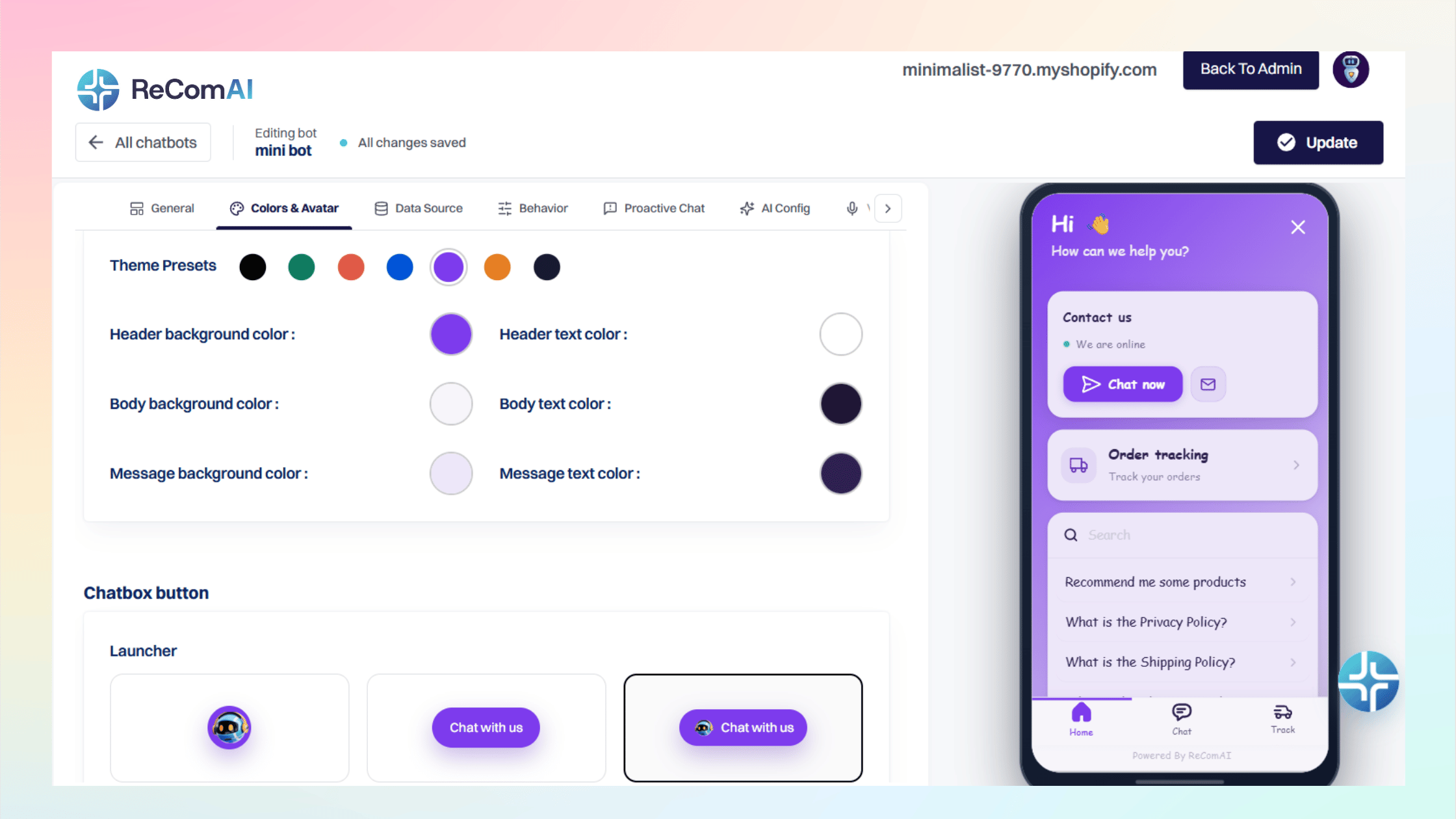
Full personalization stack, no code required. ReComAI's AI Product Recommendations go live in minutes from the Shopify app store. No liquid edits, no developer calls. It tracks real-time behavior clicks, scroll depth, add-to-cart events and updates recommendations instantly.
A 24/7 AI chatbot that actually sells. This is where ReComAI separates itself from every other tool on this list. The built-in AI Chatbot doesn't just answer FAQs it captures leads, recommends products conversationally, and handles objections at 2am when your team is offline. Most recommendation tools stop at the widget. ReComAI extends personalization into the conversation itself.
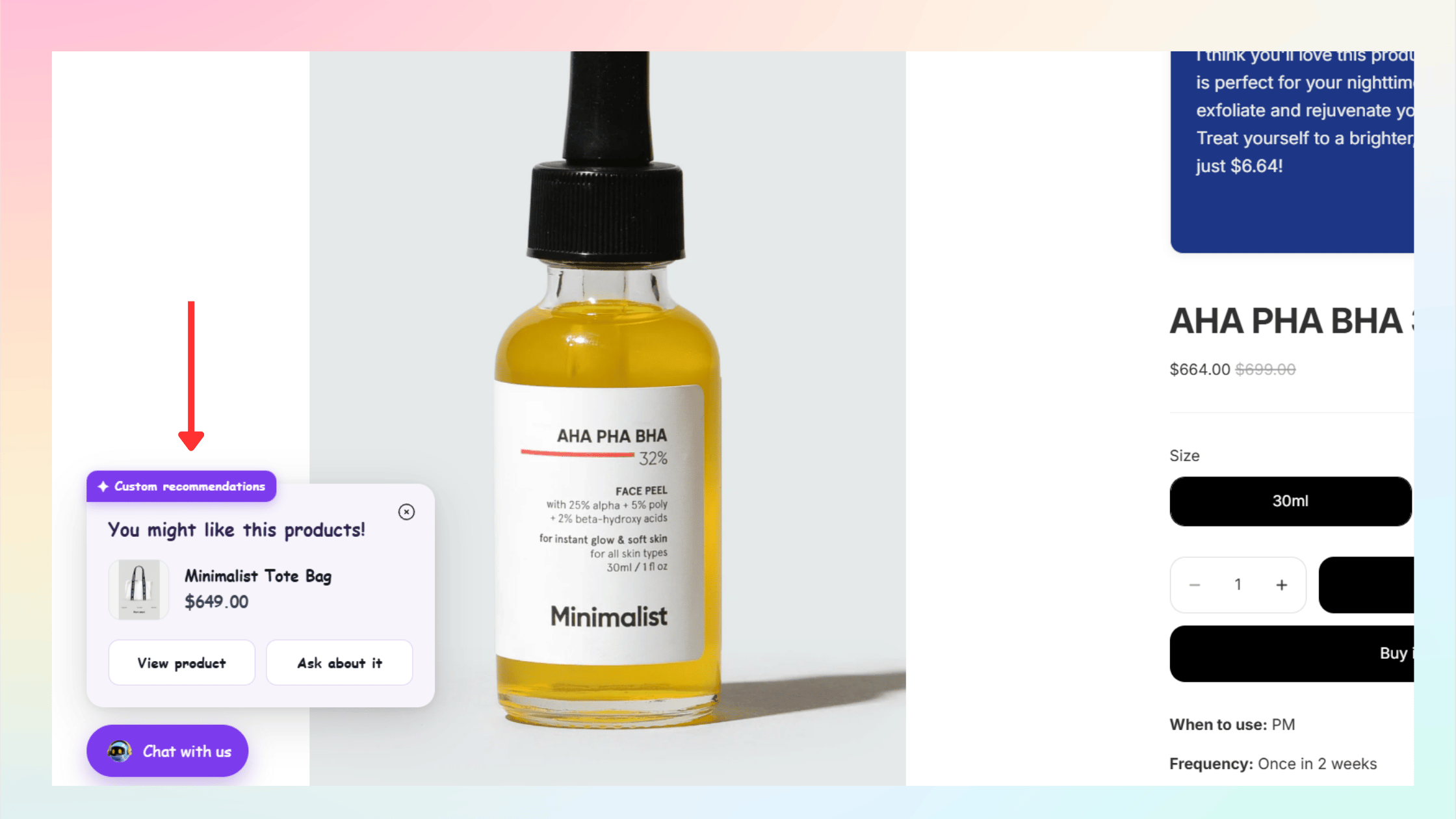
Smart upsell and cross-sell nudges that aren't annoying. The AI Auto Nudge Popups are behavior-triggered they fire based on exit intent, cart value thresholds, or time on page. They're not the generic "before you go!" popups that every shopper ignores. They're contextual, and the data shows it.
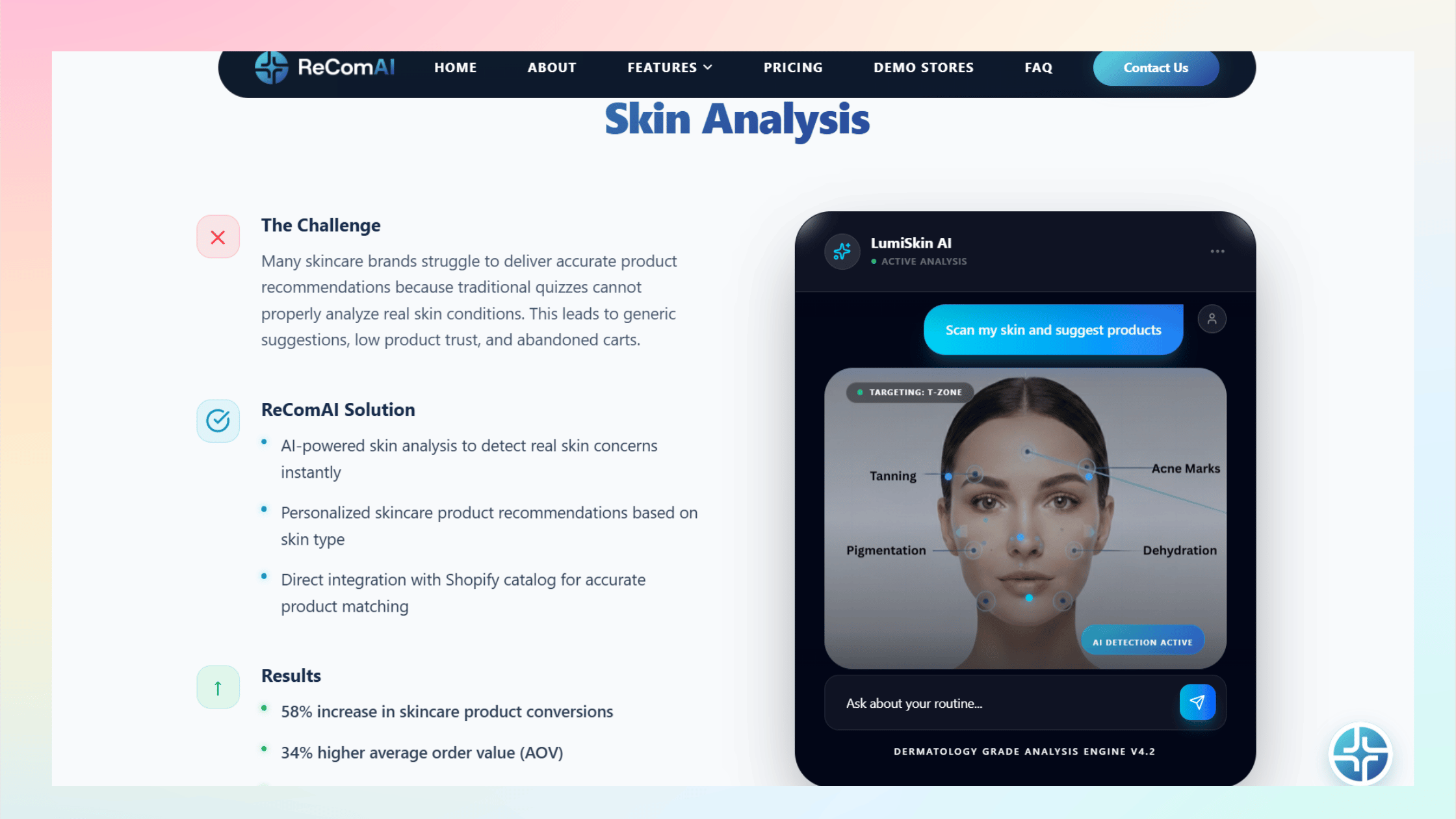
AI Skin Analysis for beauty stores. If you run a skincare or beauty brand, this feature alone is worth the switch. ReComAI's AI Skin Analysis lets shoppers scan their skin through the browser and receive personalized product recommendations based on their actual skin type reducing returns and dramatically increasing conversion confidence.
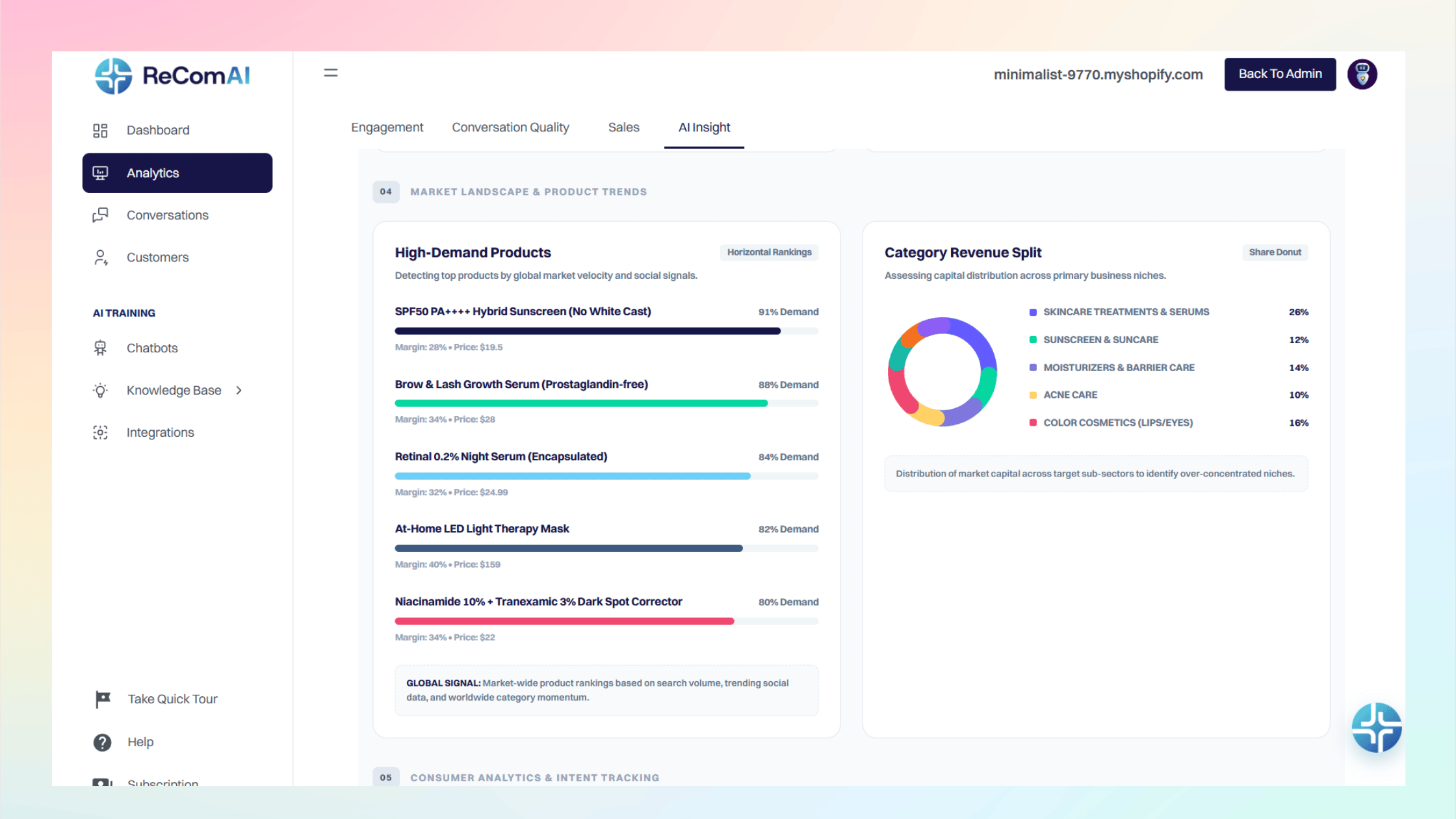
Real-time revenue attribution. The Revenue Dashboard shows you, to the dollar, what the AI generated not just assisted. You'll know your ROI before the end of the month.
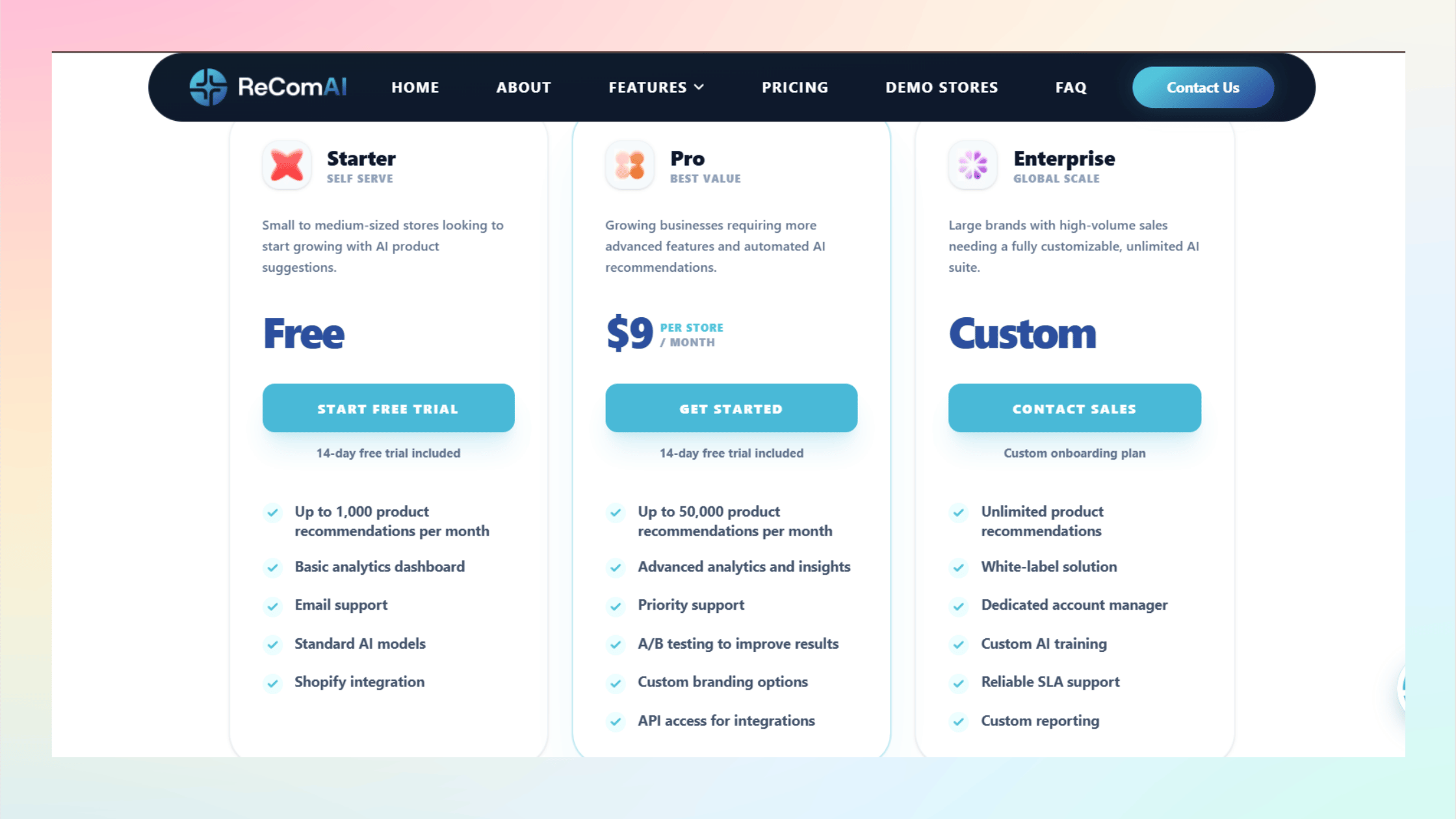
Pricing: ReComAI uses flat monthly pricing no revenue percentage, no per-resolution surcharges. Plans are designed to stay predictable as your store scales. See current pricing at recomai.
Pros & Cons:
- ✅ Full AI stack:recommendations + chatbot + nudges + skin analysis + dashboard
- ✅ No-code setup, live in under 60 minutes
- ✅ Works on Shopify, WooCommerce, and Magento
- ✅ 24/7 AI chatbot with lead capture built in
- ✅ Transparent flat-fee pricing
- ⚠️ Best results come after 2–3 weeks of behavioral data collection
Here's the LimeSpot section fully replaced with Zendesk:
2. Zendesk — Best for Enterprise-Grade Customer Support + AI
Who it's for: Mid-to-large Shopify and Magento merchants who already use Zendesk for customer support and want to extend its AI capabilities into product engagement and chat — without adopting a separate tool.
Zendesk is one of the most recognized names in customer service software. Its AI layer, powered by Zendesk AI, handles ticket routing, smart replies, and conversational bots across email, live chat, and social channels. For merchants with high support volumes, it's a natural extension of an existing workflow.
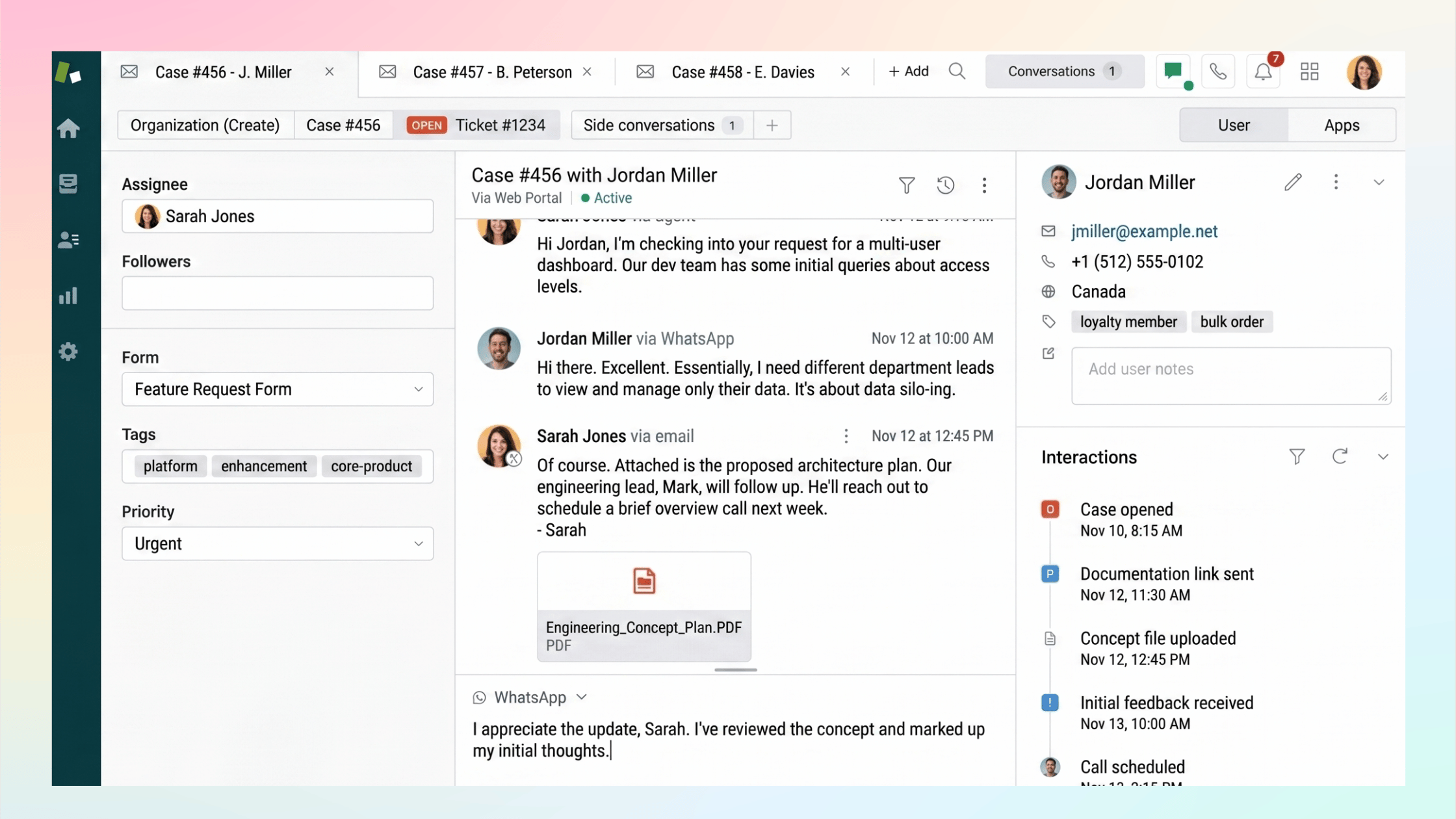
Why it's on the list: If your team is already running Zendesk for support tickets and you want a chatbot that integrates directly into that ecosystem — without migrating to a new platform — Zendesk's AI features offer a familiar, reliable path.
Key limitations: Zendesk is built for support resolution, not revenue generation. It won't surface AI-powered product recommendations, trigger upsell nudges, or tell you which chatbot conversation led to a completed purchase. You'll resolve tickets efficiently — but you won't grow AOV. That's a fundamentally different job than what ReComAI does.
Pricing: Zendesk Suite plans start at $55/agent/month (billed annually). AI features are add-ons — Zendesk AI starts at an additional $50/agent/month. For a team of three agents with AI enabled, you're looking at $315/month minimum — before any eCommerce-specific personalization is even possible.
Pros & Cons:
- ✅ Best-in-class ticket management and support workflows
- ✅ Strong omnichannel coverage — email, chat, social, voice
- ✅ Familiar interface for teams already in the Zendesk ecosystem
- ❌ No AI product recommendations or upsell functionality
- ❌ No revenue attribution — zero visibility into sales impact
- ❌ Expensive at scale, especially with AI add-ons
- ❌ Designed for support teams, not eCommerce revenue growth
3. Frequently Bought Together Best Budget Option
Who it's for: Small Shopify stores that need Amazon-style "frequently bought together" bundles on product pages without a large monthly fee.
Frequently Bought Together does exactly what the name says. It analyzes your store's order history and surfaces product bundles with a one-click "add all to cart" button. It's simple, it works, and the pricing is merchant-friendly.
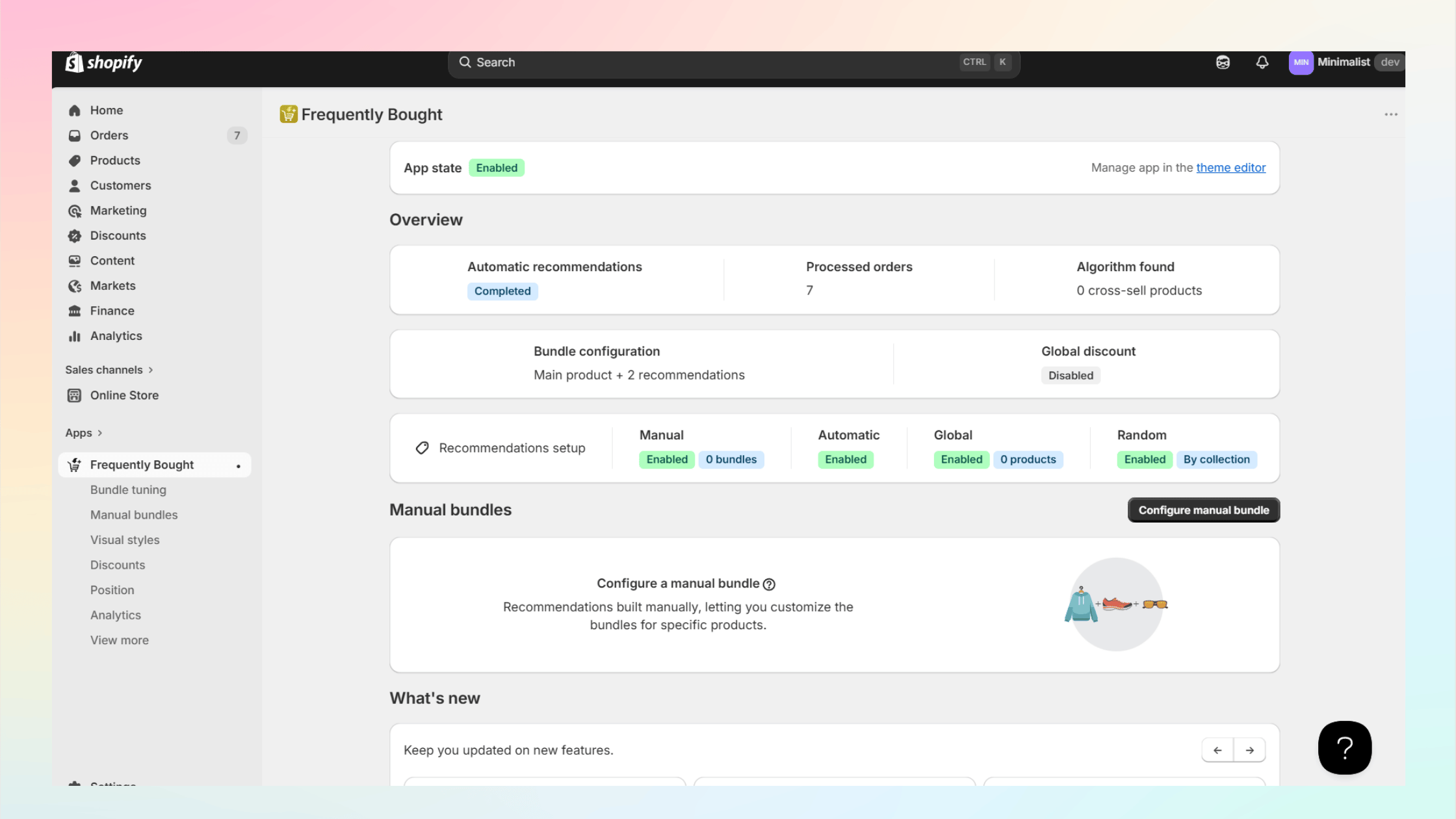
Why it's on the list: For stores doing under $20K/month in revenue that need a cross-sell widget without complex setup, this is a solid starting point.
Key limitations: It's purely a product-page widget. There's no personalization, no behavioral AI, no chatbot, and no post-purchase optimization. As your store grows, you'll outgrow it quickly.
Pricing: Free for development stores. Paid plans start at $19.99/month flat no revenue percentage.
Pros & Cons:
- ✅ Affordable and simple to install
- ✅ Works well for straightforward bundle offers
- ❌ No AI personalization recommendations are order-history based only
- ❌ Single placement only (product page)
- ❌ No analytics beyond basic click data
4. Visually Best for A/B Testing + Personalization Combined
Who it's for: Data-driven merchants who want to run personalization experiments alongside their recommendation strategy.
Visually is a conversion optimization platform that includes recommendations as one of its tools. Its core strength is A/B testing you can test different recommendation widgets, page layouts, and personalization rules against each other.
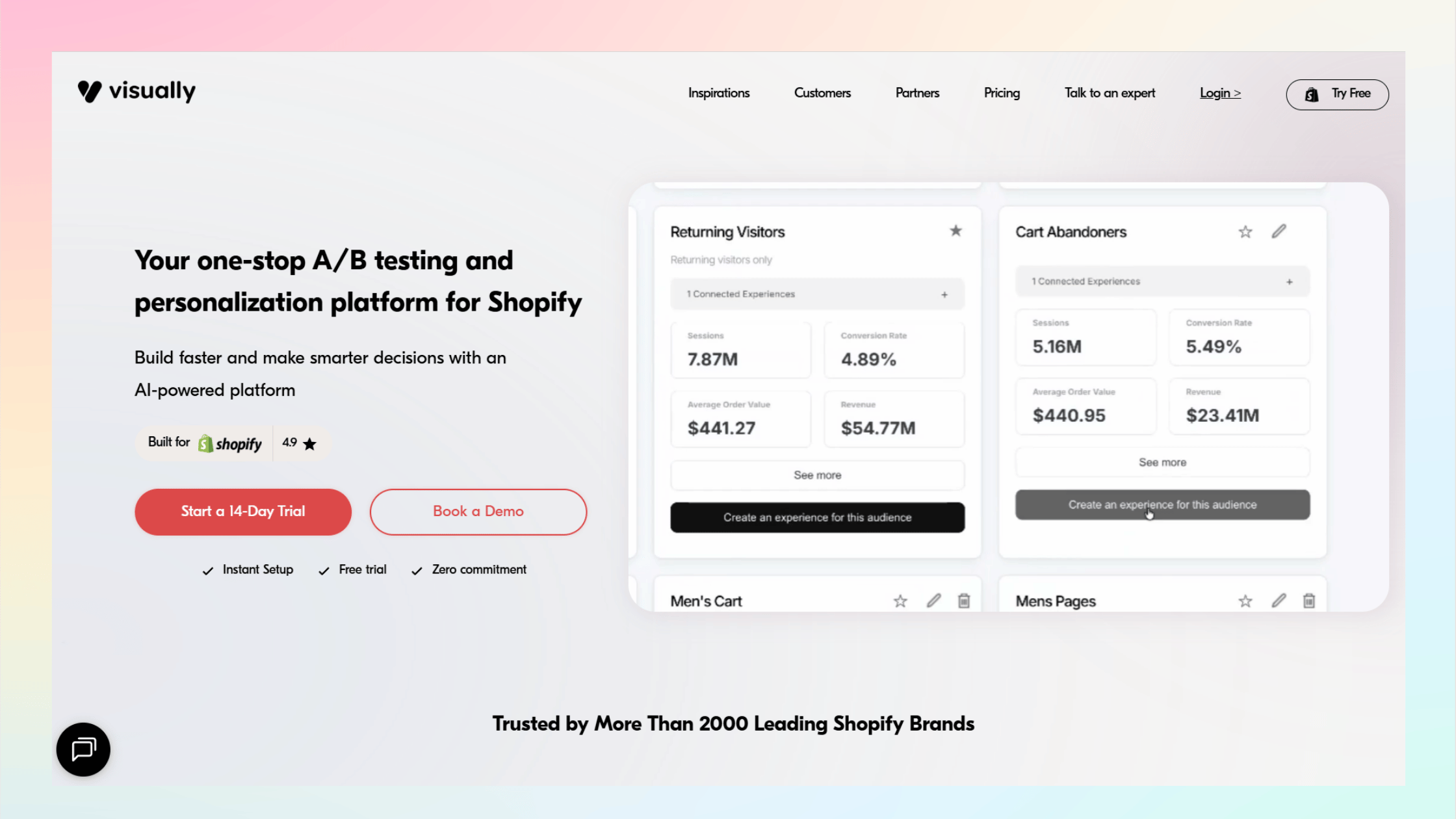
Why it's on the list: If your team already runs regular CRO experiments and wants recommendations to be part of that testing framework, Visually makes the integration seamless.
Key limitations: Visually isn't a dedicated recommendation engine. It's a broad CRO tool that includes recommendations which means neither feature is as deep as a specialist product. Pricing is custom (translation: expensive), and onboarding requires working with their team.
Pricing: Custom pricing most merchants report starting at $300–$500/month. No public pricing page.
Pros & Cons:
- ✅ Best-in-class A/B testing for recommendations
- ✅ Good for teams with a CRO-focused culture
- ❌ No chatbot or nudge popups
- ❌ Expensive and not self-serve
- ❌ Overkill for stores that just need solid AI recommendations
5. Also Bought Best for Amazon-Style Cross-Sells
Who it's for: Shopify merchants who want a clean "customers also bought" widget that mirrors the Amazon shopping experience.
Also Bought is purpose-built for one thing: displaying what other customers bought alongside a given product. It's reliable, fast to load, and has a clean UI. The recommendation algorithm is based on order correlation not behavioral AI.
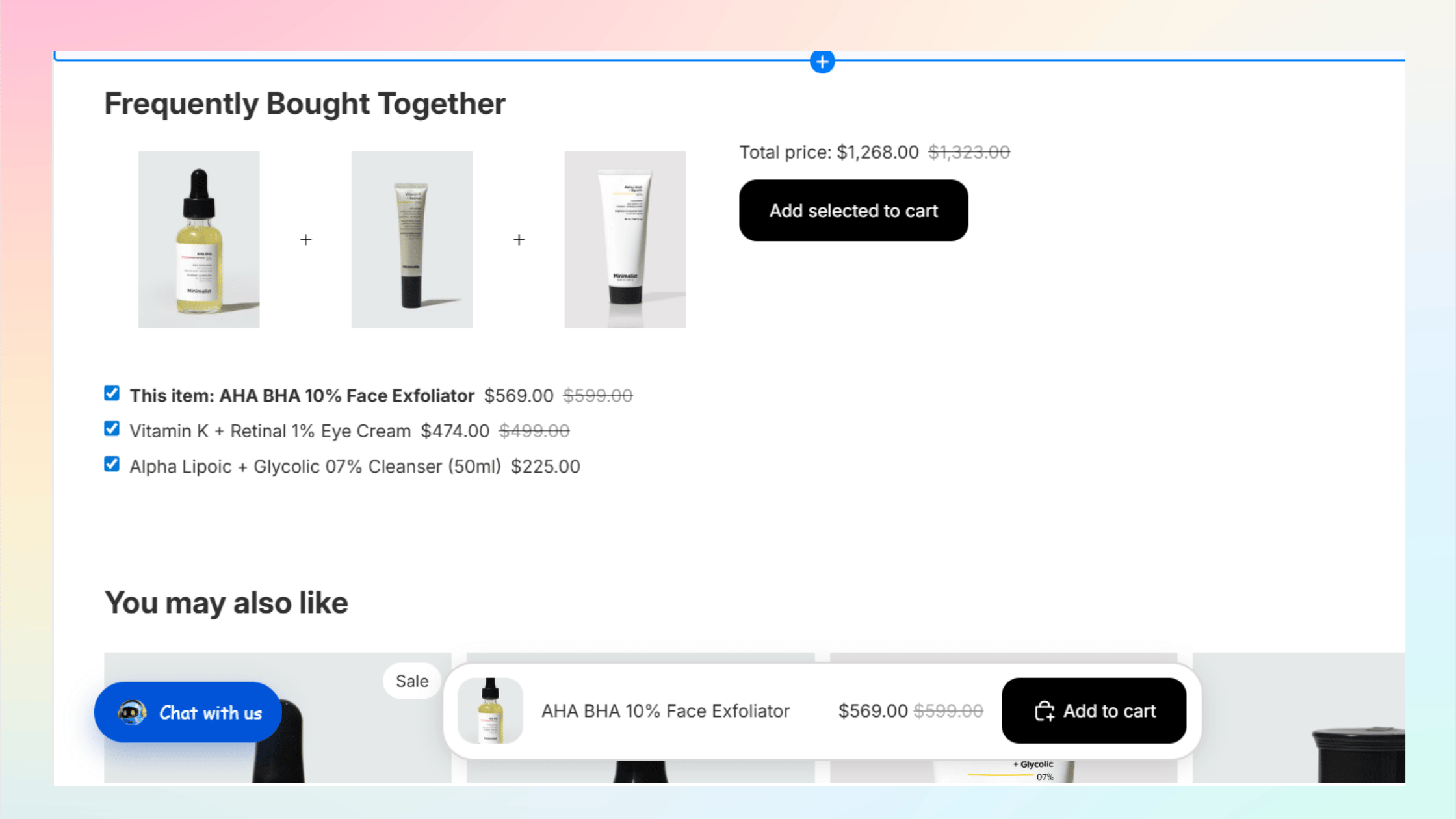
Why it's on the list: It's a proven, no-frills cross-sell tool with a loyal user base. If your catalog is large and your order volume is high, the correlation-based algorithm produces reasonable results.
Key limitations: There's no real-time personalization. Every shopper sees the same "also bought" products for a given item, regardless of their browsing behavior. No chatbot, no nudges, no revenue dashboard.
Pricing: $9.99/month flat. Simple and affordable.
Pros & Cons:
- ✅ Very affordable
- ✅ Fast and reliable performance
- ❌ No individual shopper personalization
- ❌ Single widget placement only
- ❌ No analytics beyond basic reporting
6. Bold Commerce Best for Enterprise Upsell + Subscriptions
Who it's for: High-volume Shopify Plus merchants who need subscription management, post-purchase upsells, and custom checkout flows as part of one platform.
Bold has been in the Shopify ecosystem for over a decade and is one of the most feature-rich commerce platforms available. Its upsell suite is genuinely powerful you can create complex post-purchase offer flows, subscription upsells, and bundle builders.
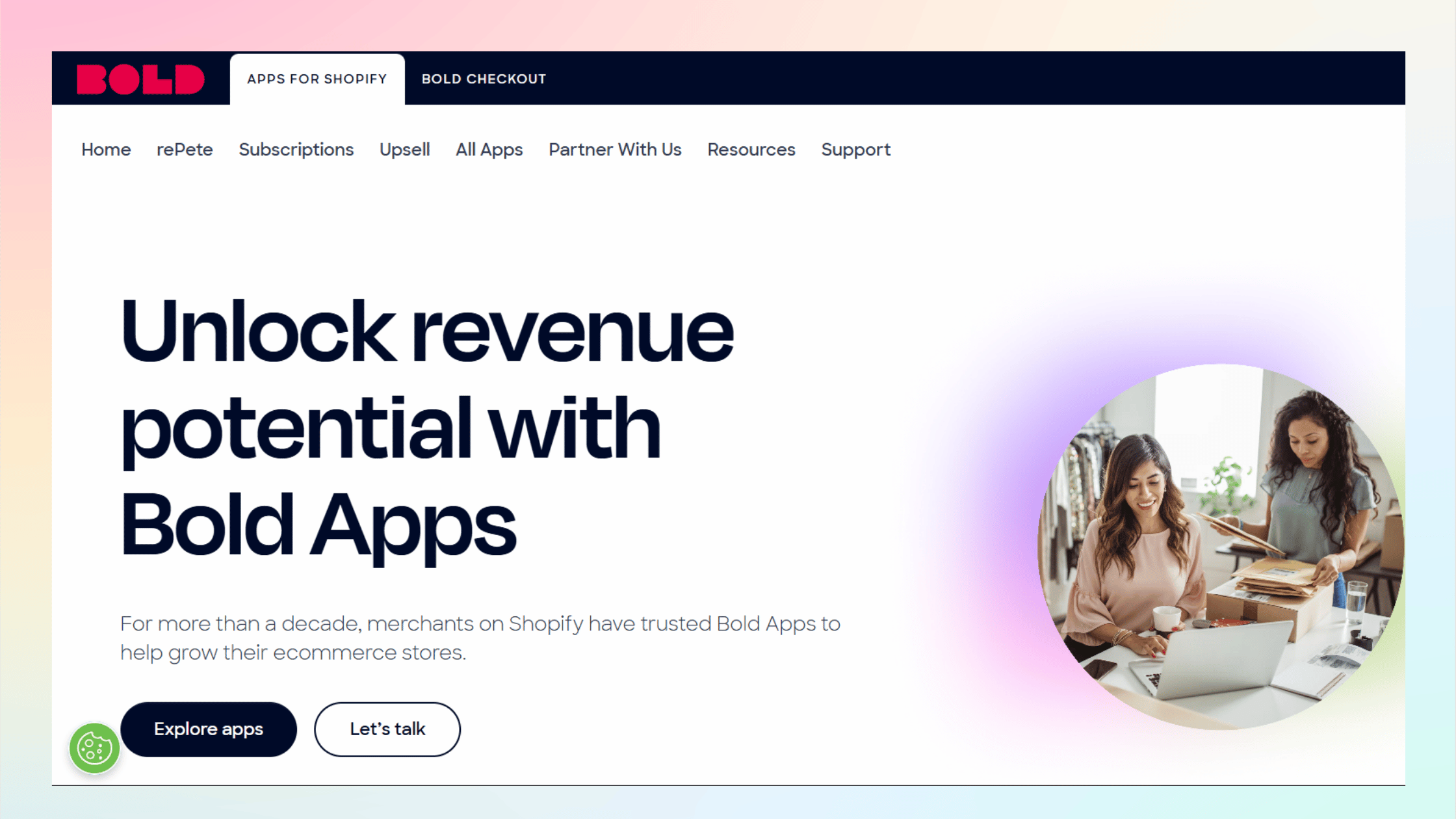
Why it's on the list: For enterprise merchants running a subscription model alongside one-time purchases, Bold's feature depth is hard to match.
Key limitations: Bold is designed for scale which means it's not cheap, not always simple, and sometimes requires their implementation team to set up correctly. It's a platform, not an app. If you're a $500K/year Shopify store, it's likely overkill.
Pricing: Module-based pricing. Upsell features typically start at $19.99/month, but full platform access with subscriptions runs $300+/month.
Pros & Cons:
- ✅ Deep subscription + upsell integration
- ✅ Reliable at enterprise scale
- ❌ Complex setup, often requires developer support
- ❌ Modular pricing adds up quickly
- ❌ No AI chatbot or behavioral personalization
Tips for Choosing the Right Tool for Your Store
Match the tool to your biggest revenue leak
Are you losing shoppers at the cart? You need smart nudges and upsell triggers. Are shoppers bouncing from the product page? You need real-time behavioral recommendations. Identify where revenue is leaking first then pick the tool that plugs that specific hole.
Don't underestimate the AI Agent bot advantage
Most merchants focus entirely on recommendation widgets and overlook conversational AI. But a shopper who asks "what's right for my skin type?" and gets a personalized answer with product suggestions converts at a dramatically higher rate than one who browses passively. Tools with built-in AI chatbots (like ReComAI) close the gap between passive browsing and active buying intent.
Demand revenue attribution, not just click data
Click-through rates on a recommendation widget tell you very little. What you need to know is: did the shopper who clicked actually buy, and what did that add to your AOV? If your tool can't answer that question with precision, you're flying blind on ROI. Insist on a dashboard that attributes revenue directly to the AI.
Test before you commit
The best tools let you install them, connect your catalog, and see results in a live environment before you're locked into a contract. If a vendor wants you on a long-term plan before you've seen a single conversion lift, that's a red flag.
Check platform compatibility
Shopify merchants have the widest range of options. But if you're on WooCommerce or Magento, your choices narrow significantly. ReComAI is one of the few AI recommendation platforms that fully supports all three. Factor in your current and future platform plans before committing.
The Verdict: Which TIDIO Alternative Actually Wins?
Here's the honest summary.
Most tools on this list do one thing well. Frequently Bought Together does cheap cross-sells. LimeSpot does attractive widgets. Also Bought does correlation-based "customers also bought." Bold does enterprise subscriptions. Visually does CRO experiments.
But none of them do all of it and none of them include a 24/7 AI chatbot that sells.
That's the gap ReComAI fills. It's the only tool on this list that combines real-time behavioral recommendations, conversational AI, smart nudge popups, skin analysis (for beauty brands), and a revenue dashboard that actually shows you what the AI earned not just what it assisted.
For Shopify, WooCommerce, and Magento merchants who are serious about using AI to grow AOV and conversions not just adding a widget and hoping ReComAI is the clearest step up from Rebuy.
It installs without a developer. It starts learning your catalog immediately. And the pricing doesn't punish you for having a good month.
6.Frequently Asked Questions (FAQs)
Q: Why should I consider TIDIO alternatives if TIDIO is working for us?
A: TIDIO is a solid platform, but its revenue-based pricing and developer-dependent setup make it an expensive choice as your store scales. Many merchants find they're paying more each month without a proportional lift in conversion performance. Alternatives like ReComAI offer flat-fee pricing and more complete AI stacks including chatbot and nudge functionality that TIDIO doesn't provide natively.
Q: Can I use a TIDIO alternative on WooCommerce or Magento, not just Shopify?
A: Most recommendation tools are Shopify-only. ReComAI is the primary exception it natively supports Shopify, WooCommerce, and Magento, making it the strongest choice for merchants who operate across multiple platforms or plan to migrate.
Q: Do any of these tools include an AI chatbot for product recommendations?
A: Yes ReComAI's AI Chatbot is included in its platform and handles product recommendations conversationally, 24/7. None of the other five tools on this list include a native AI chatbot.
Q: How quickly can I see results after switching from Rebuy?
A: With no-code tools like ReComAI, you can be live with AI recommendations within an hour of install. Meaningful AOV and conversion data typically appears within 2–3 weeks as the behavioral model builds shopper profiles. Revenue attribution shows up in the dashboard in real time from day one.
Q: What's the most important metric to track when evaluating an AI recommendation tool?
A: AOV lift and AI-attributed revenue not click-through rate. A recommendation that gets clicked but doesn't convert is costing you UX space. Tools like ReComAI provide revenue dashboards that show exact AI contribution to completed orders.
Q: Is AI skin analysis only useful for beauty brands?
A: Primarily, yes ReComAI's AI Skin Analysis is purpose-built for skincare and beauty stores. But the underlying principle (using AI to match shoppers to products based on personal input) is applicable to any vertical where individual fit matters apparel, health supplements, hair care, and more.
Q: What happens if I need support during setup?
A: ReComAI provides onboarding support as part of its standard plans. Given that 100+ Shopify stores are already live on the platform, the setup documentation is battle-tested. There's no "book a call before you can install" gatekeeping you can start immediately.
Ready to See What AI Recommendations Actually Do to Your Revenue?
ReComAI gives Shopify, WooCommerce, and Magento merchants a complete AI personalization stack with real-time recommendations, a 24/7 AI chatbot, smart nudge popups, and a revenue dashboard that tracks every dollar the AI drives.
No developer needed. No revenue-percentage pricing. No fluff.
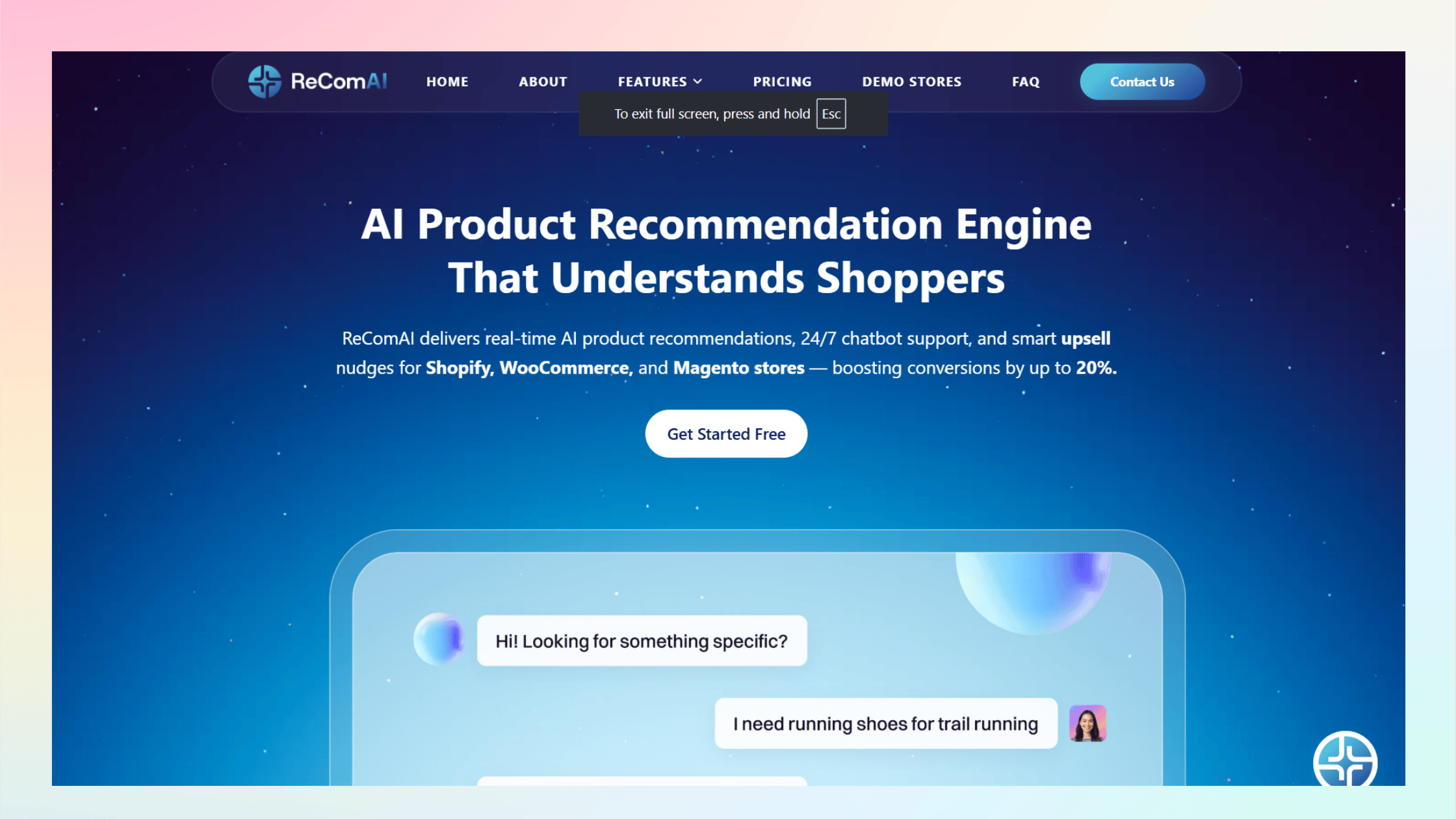
Start your free trial at recomai → Or book a 30-minute demo and we'll show you exactly how ReComAI would perform in your store before you commit to anything.